
AI in Education in Australia: Practical Use Cases for K–12 Schools and Education Centres

Jun 19, 2026



Australian schools and education centres face growing pressure to deliver quality learning experiences while managing administrative workloads and limited resources. In 2024, full-time classroom teachers reported a median working week of 50 hours during school terms [1]. Much of this time extends beyond classroom teaching to planning, assessment and other professional responsibilities.
AI in education offers opportunities to address some of these pressures, from reducing repetitive tasks to supporting personalised learning and more efficient operations. This article examines practical applications, real-world Australian examples, potential business benefits and key considerations for responsible adoption.
AI is changing how schools and education centres deliver learning, support students and manage daily operations. For education leaders, a practical question is: How is AI used in education beyond the classroom? Its applications can be grouped into four key areas:
- Learning Content Creation: Assist educators in developing lesson plans, exercises, assessments and learning materials, reducing preparation time.
- Personalised Learning Support: Provide tailored explanations, practice activities and immediate feedback based on individual learning needs and progress.
- Course Discovery and Recommendations: Help learners identify relevant courses, resources and learning activities based on their interests, learning goals and proficiency levels.
- Academic and Administrative Automation: Streamline routine enquiries, organise student records, summarise information and prepare attendance, assessment or progress reports.
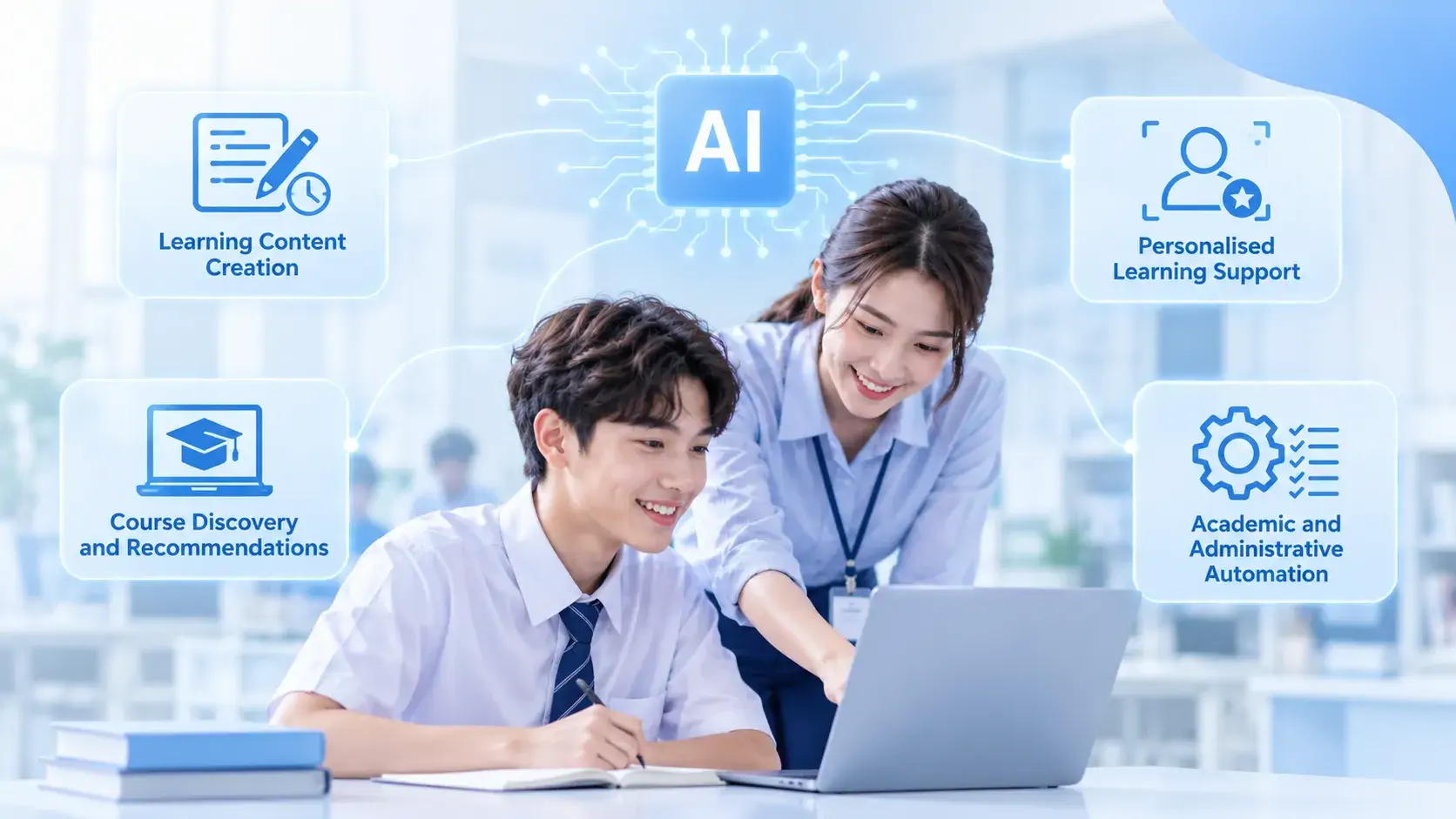
These applications serve different purposes, but they share a common objective: reducing time spent on repetitive work while improving the availability and usefulness of information. Teachers and education staff remain responsible for reviewing outputs, supporting learners and making decisions that require professional judgement.
Australian schools and education technology companies are exploring new ways to improve student support, parent engagement and access to learning. The following AI in education examples show how these capabilities are being integrated into services beyond traditional classroom activities.
Westbourne Grammar – AI Digital Twin for Parent Engagement
Westbourne Grammar, a school in Melbourne, introduced an AI-powered digital twin of its principal, Adrian Camm, to support parent communication and school enquiries. Available through the school's website, the virtual principal can answer questions, assist prospective families with enrolment enquiries and communicate in approximately 100 languages.
The initiative extends school engagement beyond regular operating hours while offering families a more accessible way to obtain information [2]. Although quantified enrolment results have not been published, it demonstrates how conversational AI can support communication and student recruitment.
Thinkgrid Labs – Personalised AI Tutor for Exam Preparation
Australian technology company Thinkgrid Labs developed a WhatsApp-based AI tutor to help students prepare for selective school entrance examinations. The solution addresses a common challenge: students need personalised practice and guidance, but tutors are not always available when they need assistance.
Powered by a customised GPT-4 integration, the chatbot tracks students' questions, avoids unnecessary repetition and adjusts question difficulty based on their performance. This allows students to practise at their own pace and receive support outside scheduled tutoring sessions [3].
The project illustrates how AI tutoring can extend learning support beyond the classroom through familiar communication channels.
KPS's AI-Powered Education Marketplace
Finding suitable training programs can be challenging when course information is fragmented across multiple providers. Learners may struggle to compare options, while education providers need better ways to reach prospective students and manage enrolments.
KPS developed an AI-powered education marketplace for an Australian EdTech organisation, bringing together intelligent course discovery, personalised recommendations and digital course creation. Its core capabilities include:
- AI-Powered Course Discovery: Intelligent search and recommendations help learners find programs aligned with their needs.
- AI-Assisted Course Creation: Support providers in developing and customising digital learning content.
- Integrated Enrolment: Connect course discovery, provider information and enrolment within one platform.
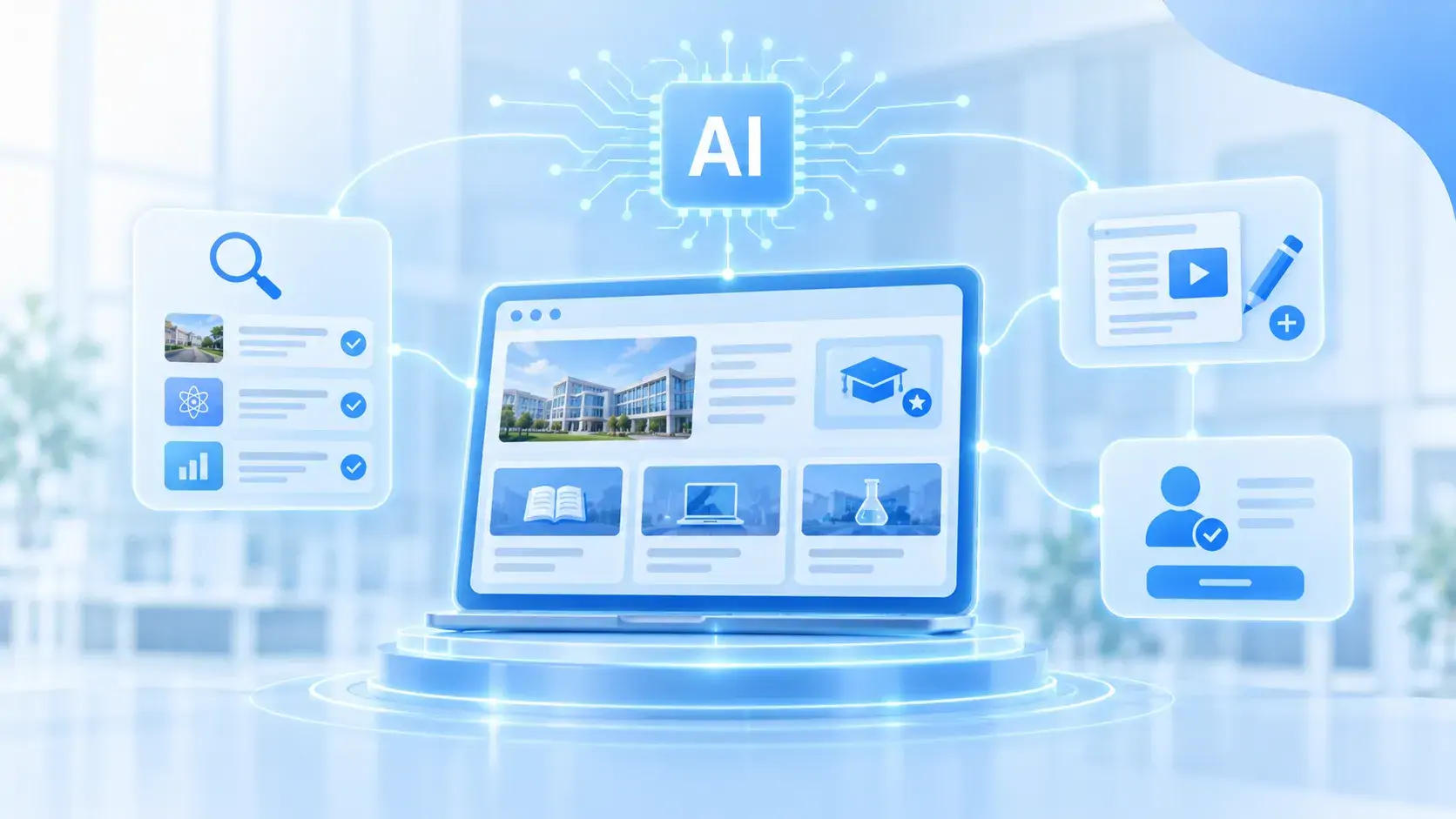
The case demonstrates how AI can improve the course discovery experience while connecting learners and education providers through integrated workflows. Quantified performance results have not been publicly disclosed.
Together, these AI in education examples illustrate how technology is extending services beyond traditional delivery models, from personalised tutoring and parent engagement to intelligent course discovery and enrolment.
For schools and education centre chains, the business value of AI comes from improving how existing work is performed. The benefits of AI in education extend beyond teaching to administrative efficiency, student recruitment and organisation-wide decision-making.
- Improve Staff Productivity: Automate repetitive administrative tasks, helping teachers and staff spend less time on routine work and more time on teaching, student support and higher-value activities.
- Reduce Operational Errors: Support standardised processes and consistent information handling across student administration, reporting and multi-campus operations, with human review where necessary.
- Enhance Marketing and Student Recruitment: Help education providers understand learner and parent needs, improve course discovery and connect prospective students with relevant programs.
- Optimise Operating Costs: Reduce manual effort and improve resource allocation, particularly where similar processes are repeated across multiple campuses or education centres.
- Support Data-Driven Decisions: Connect information from academic, administrative and operational systems to improve visibility into learner progress, resource utilisation and program performance.
These benefits are not automatic. An AI application may save time in one activity but create additional work if its outputs require extensive checking or correction. Assessing the benefits of AI in education therefore requires looking at the full workflow, including staff review, data preparation and ongoing support.
AI adoption requires schools and education providers to address privacy, student safety and accountability alongside operational benefits. Four considerations are particularly important:
Privacy and Data Protection: Follow applicable Australian privacy requirements and avoid entering personal or sensitive student information into public AI tools. Assess vendor data handling, access controls and security practices. [5].
Transparency and Accountability: From 10 December 2026, additional disclosure requirements apply to certain automated decisions involving personal information under the Privacy Act. Organisations should review whether their AI-assisted decisions fall within scope [6].
Accuracy and Human Oversight: Ensure qualified staff review AI outputs, particularly those affecting student assessment, progression or support.
Student Safety: Apply age-appropriate access, content filtering and supervision in line with the Australian Framework for Generative AI in Schools [7].
The level of oversight should reflect the risks of each application, particularly when children or sensitive information are involved.
KPS supports education providers and training organisations in modernising teaching, learning and operational workflows through AI-enabled solutions and platform development. Its approach focuses on combining AI capabilities with the systems, data and processes organisations already use, rather than introducing AI as an isolated tool.
Key solution areas include:
- Education Management – T-EduOne: A centralised platform for managing student information, academic processes and education operations. By connecting core administrative workflows and information, the solution provides a foundation for more efficient institutional management, reporting and data-driven decisions.
- AI Sales Coaching: An AI-powered training solution that enables organisations to deliver realistic sales practice through simulated conversations, personalised feedback and performance insights. It supports scalable workforce development and helps training teams assess employee skills more consistently.
- Smart Education Marketplace: An integrated platform combining AI-powered course discovery, personalised recommendations, AI-assisted course creation and enrolment management. It helps education providers connect with learners while supporting course delivery and engagement.
These solutions address different education and training needs, from institutional management to learner engagement and workforce development. They also reflect the importance of designing AI around the organisation's operating model, with appropriate integration, data management and human oversight.
For schools and education providers, the priority is to identify the processes where AI can deliver measurable improvements and build the technical and operational foundations needed to support sustainable adoption.
AI in education offers Australian schools and education centres opportunities to reduce administrative workloads, personalise learning and improve operational efficiency. However, its success depends on reliable data, clear workflows and appropriate human oversight. As the AI in education examples above demonstrate, education leaders should start with specific challenges, measure outcomes and expand adoption where AI delivers proven value for educators, learners and their organisations.
1. How is AI used in education when schools are just getting started?
Start with a repetitive, low-risk task that uses approved information and has a clear review process. Examples include preparing practice questions, drafting lesson materials or responding to routine course enquiries. Student assessment, wellbeing and other high-impact decisions generally require stronger safeguards.
2. Can teachers enter student information into public AI tools?
Personal or sensitive student information should not be entered into publicly available generative AI tools. Schools should use approved systems with appropriate privacy protections, access controls and documented data-handling procedures.
3. Can AI make decisions about student progression or learning support?
AI can assist by organising information, identifying patterns and preparing recommendations. However, decisions affecting student progression or support should involve qualified staff who can review the evidence, consider individual circumstances and address errors or concerns.
4. How should schools evaluate an AI solution provider?
Schools should assess the provider's experience in education, data protection measures, system integration capabilities and ability to support ongoing operations. Important questions include where data is stored, how AI outputs are reviewed, what limitations exist and how responsibilities are divided between the provider and the organisation.
5. How can education organisations measure the return on investment from AI?
Measure the performance of the process before and after implementation. Depending on the use case, relevant indicators may include staff hours saved, administrative processing time, correction effort, service quality, learner engagement, enrolment conversion or training completion. Evaluation should include the costs of implementation, maintenance and human review.
References
[1] Australian Institute for Teaching and School Leadership (AITSL). National Trends: Teacher Workforce – Latest Release. June 2026.
[2] ABC News (2025), Artificial intelligence is revolutionising classroom learning.
[3] Thinkgrid Labs, Australia's First AI Powered Selective Exam Tutor.
[4] Australian Government Department of Education. Workload Reduction Fund Pilots.
[5] Office of the Australian Information Commissioner (OAIC). Guidance on Privacy and the Use of Commercially Available AI Products. Updated January 2025.
[6] Office of the Australian Information Commissioner (OAIC). New Resources on Transparency for Use of AI and Automated Decision-Making. September 2026.
[7] Australian Government Department of Education. Australian Framework for Generative Artificial Intelligence in Schools. Reviewed June 2025.


Table of content

Related Insights
Employee Training and Development for Workforce Capability
Explore how enterprises can connect employee training, coaching and skills development to build workforce capability at scale....
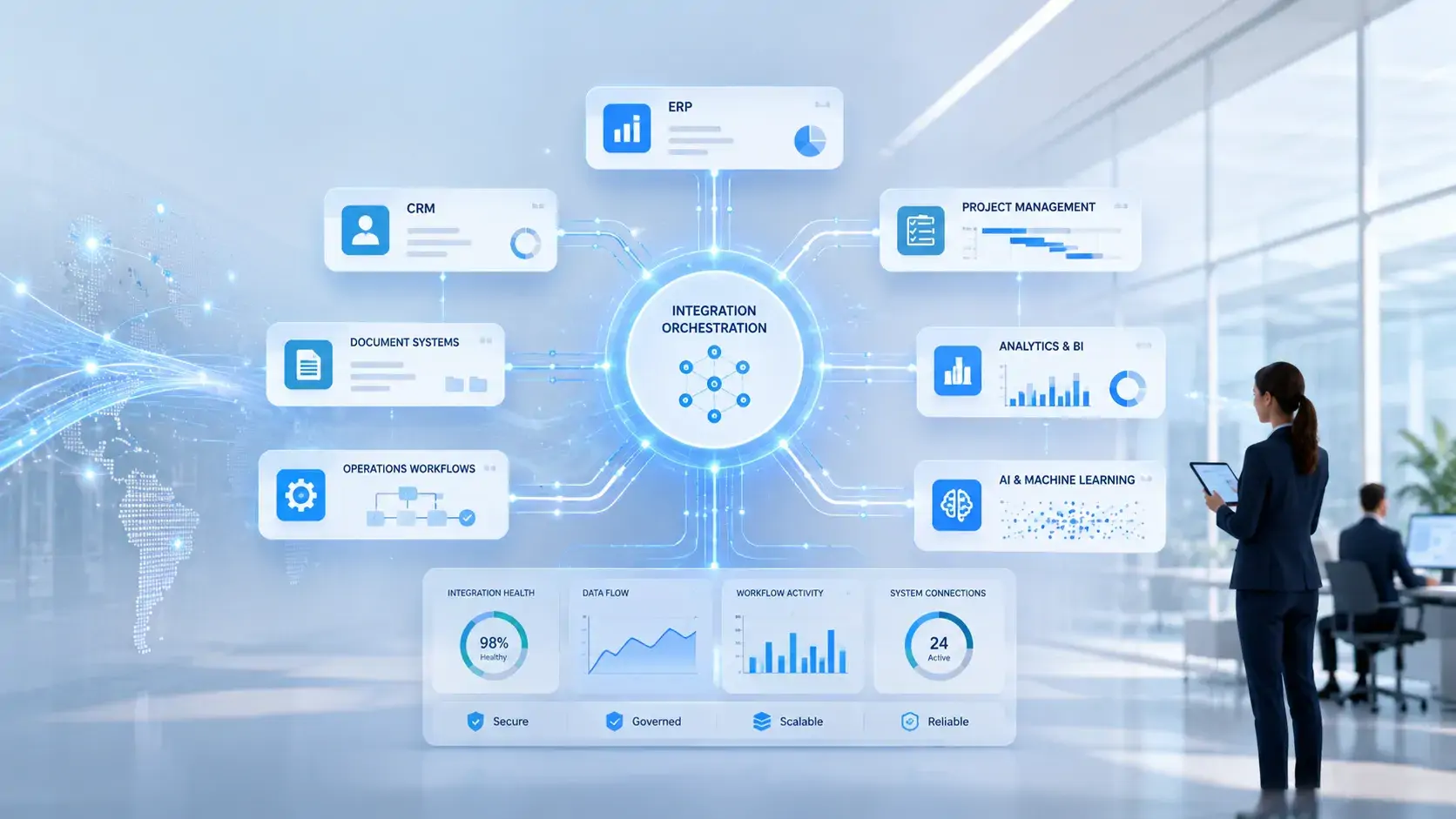
System Integration Solutions for Connected Operations
Discover how system integration solutions connect enterprise data, workflows and AI with existing systems to reduce fragmentation and improve operational visibility....

AI in Physical Security: Smarter Security for Australian Enterprises
Explore how AI in physical security transforms CCTV into intelligent monitoring with real-time threat detection, video analytics and smarter security for Australian enterprises....

Let’s build what’s next for your business
Tell us about your business challenges, we’ll help you shape the right solution.

