
Build workforce capability through connected, personalised training
Bring workforce learning, personalised development and training oversight into one connected platform.
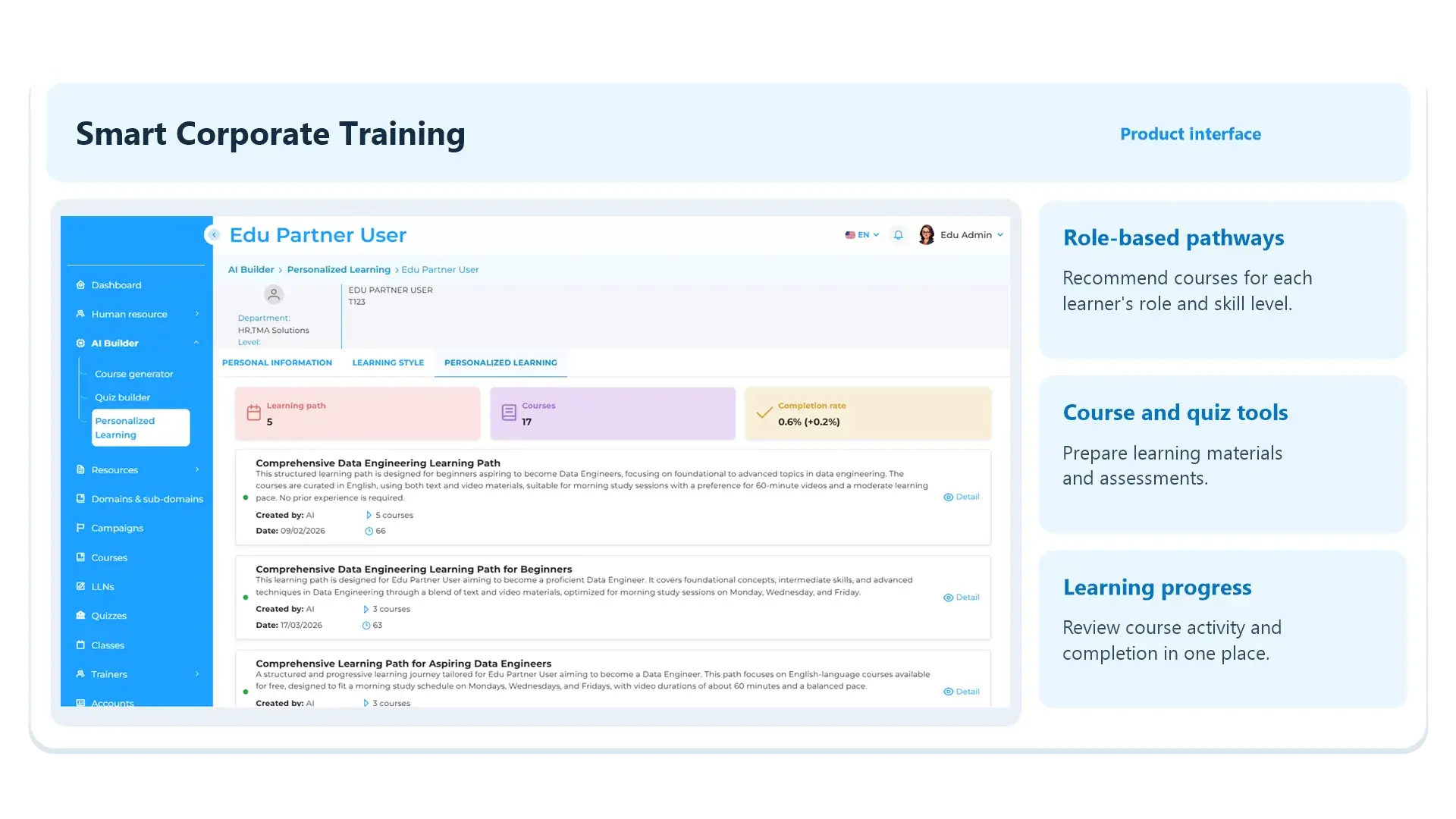
One Platform to Power Smarter Workforce Training
Smart Corporate Training brings these activities together so organisations can manage onboarding, role-based learning and ongoing development across departments and locations. Employees follow personalised pathways, access AI learning support and build skills through a mix of self-paced and instructor-led training.
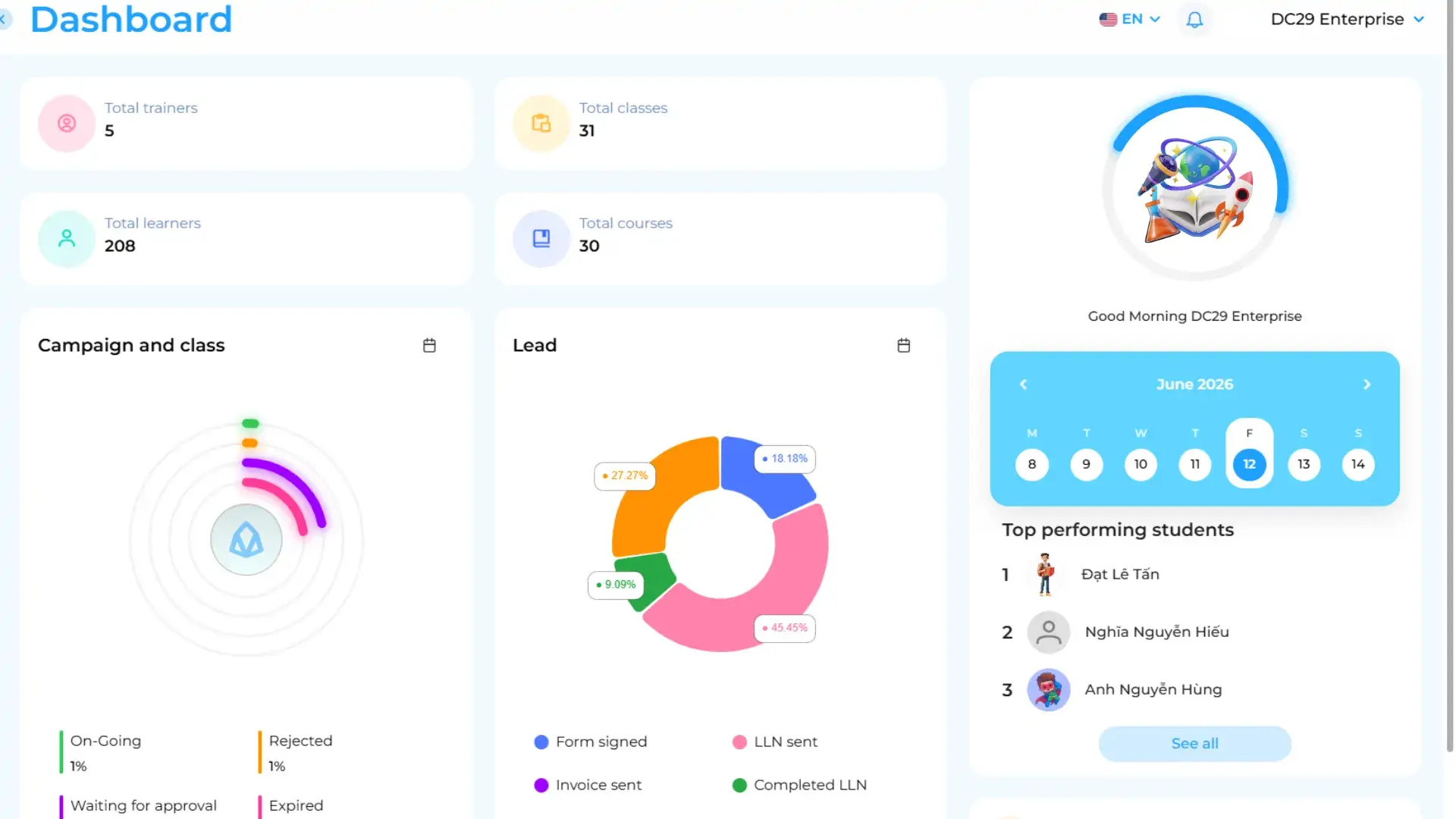

- Manage courses, virtual classrooms, learners and assessments in a central learning management system (LMS).
- Build personalised pathways around roles, skill gaps and learning progress.
- Use AI course and quiz creation tools alongside an AI tutor assistant.

- Manage certificates, reporting and payment workflows where training is offered commercially.
- Apply a consistent training structure across teams and sites.
- Reduce manual coordination of learning activities and progress updates.
- Use assessment and completion information to guide further development.
Built for corporate learning teams and training providers
Support enterprises, organisations with distributed teams and training providers that need to coordinate workforce learning and monitor progress.

Enterprises and corporate training teams
Give learning and development teams a central place to manage employee training. Role-based pathways, course and quiz tools, and progress reporting help teams coordinate learning across departments.

Organisations with distributed teams
Support employees across branches, locations and work arrangements through a shared learning environment. Teams can access self-paced content, virtual sessions and classroom activities while managers review progress centrally.

Professional training providers
Help providers organise professional and technical training for corporate learners. Course management, assessments, certificates and completion records support the delivery and reporting of training programmes.
Supporting every stage of workforce learning
Assess starting skills
Use entrance tests to establish current capability, identify gaps and give each learner a clear starting point before training begins.

Personalise learning pathways

Create courses and quizzes with AI support

Manage hybrid course delivery

Provide ongoing learner assistance

Manage teams and recognise completion

Report on training progress

Improving training consistency and workforce readiness

Less manual training administration
Centralise course delivery, learner management and reporting so teams spend less time maintaining separate records and coordinating routine updates.

Training aligned with employee roles and skill gaps
Match learning to roles, starting skill levels and progress. Employees can focus on content relevant to their work, while managers can identify where additional support is needed.

Clearer oversight as training expands
Track learning progress and performance across departments. Shared reporting helps teams review completion, maintain delivery consistency and plan the next stage of training as participation grows.

Consistent records of completed training
Completion records and certificates help training teams recognise completed courses and maintain consistent training documentation across departments.
Flexible delivery for your training environment
Fit the platform around existing training operations, organisational structures and infrastructure requirements. Scope connections to internal and HR systems so learner administration and reporting align with current workflows.
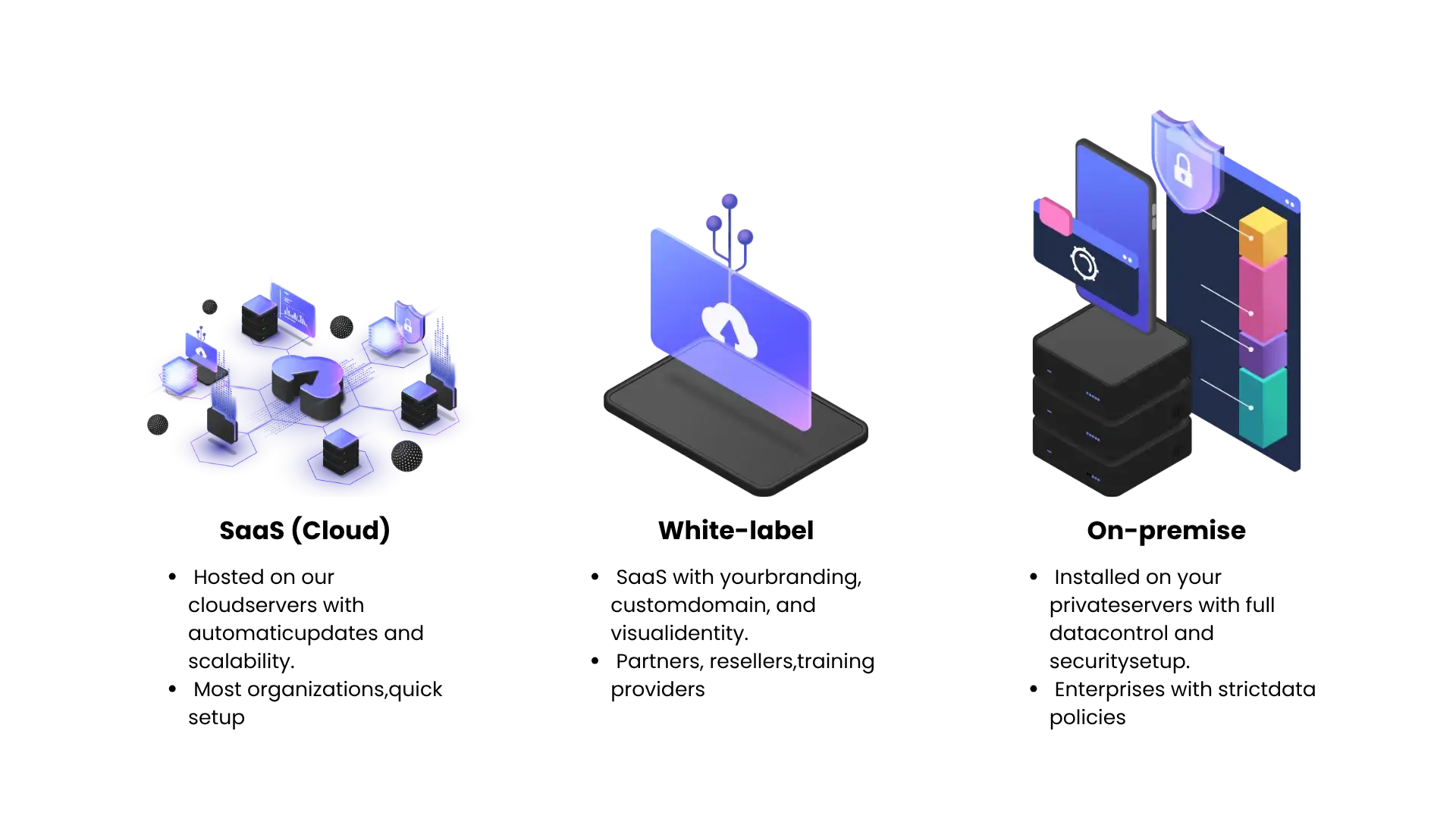
Cloud deployment
Deliver training through a hosted SaaS environment that supports platform updates and flexible capacity as participation grows.
White-label SaaS
Deliver training under your organisation’s or partner’s brand, with a custom domain and visual identity. White-label SaaS supports a consistent branded learning experience.
On-premises deployment
Deploy within the organisation’s own infrastructure to align training delivery with internal data control and security requirements.
Supporting different workforce development strategies
Explore how Smart Corporate Training can align with different workflows, delivery environments and operational priorities.
For organisations onboarding employees across departments and sites, fragmented course delivery makes progress difficult to track. Role-based pathways give new starters relevant learning activities, while shared progress records help training teams coordinate follow-up.
Key outcomes
• Consistent role-based onboarding
• Clearer learner progress
• Less manual training coordination
• Learning aligned with job responsibilities

Case Study
We sincerely appreciate our clients for their valuable feedback and support. Our top priority is to fulfil your business needs with our appropriate technology solutions.

Learning platform for IT workforce development
Discover how a technology services provider improved workforce learning through role-based pathways, personalised recommendations and clearer progress visibility. ...

PMP training management system
Discover how a professional training provider expanded delivery and reduced administration through virtual classrooms, assessments and certification management. ...

Contact Us
For any questions, support requests or partnership opportunities, please reach out to us via:


