
How AI Is Transforming Physical Security in Australia

Jun 19, 2026



Australian enterprises need physical security systems that do more than provide footage after an incident. Safe Work Australia recorded 188 traumatic worker fatalities in 2024 and 146,700 serious workers’ compensation claims in 2023–24, reinforcing the need to identify hazards and unsafe events earlier [1].
This is where ai in physical security changes the operating model. AI can analyse video continuously, identify defined threats or unusual conditions and route relevant events to people who can act. Instead of simply recording, ai powered security systems support earlier intervention, more consistent monitoring and faster real time threat detection.
The opportunity is not “smarter CCTV” alone. It is to turn cameras, alarms and access systems into a connected decision layer for safety, security and response.
Growing Safety and Compliance Pressure
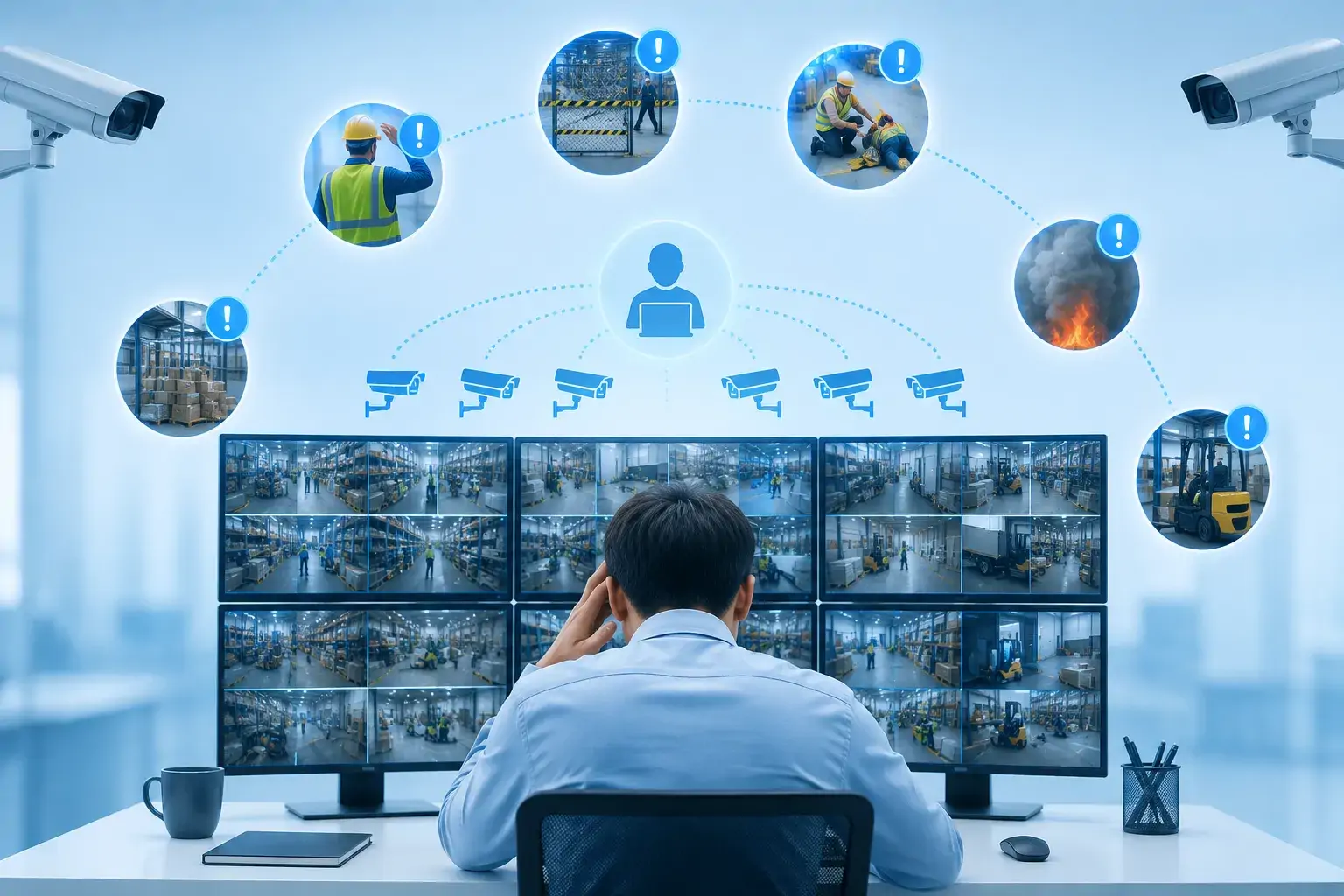
Australia’s WHS framework requires businesses to eliminate workplace risks where reasonably practicable, or minimise them where elimination is not possible. AI powered security systems can support existing safety measures by detecting risks such as missing PPE, restricted-zone entry, unsafe behaviour, smoke or fire and alerting teams when action may be required.
Rising Security Complexity and Monitoring Costs
As businesses operate more cameras, sites and monitored areas, relying on operators to continuously watch every video feed becomes difficult to scale. Security automation solutions can analyse video continuously, identify relevant events and direct operator attention to incidents that require investigation or response.
Together, these pressures are pushing physical security from continuous manual monitoring towards more proactive, AI-assisted operations.
For many businesses, adopting AI in physical security does not mean replacing the existing camera network. AI can add an intelligence layer to compatible video infrastructure, progressively moving cameras from simply capturing footage to identifying objects, understanding activities and recognising situations that may require action. This reflects the broader evolution of physical security AI from motion and object detection towards activity and contextual understanding.
Image and Object Analysis
The first layer helps cameras understand what is in the scene. Computer vision can identify and classify people, vehicles, equipment and other visible objects, turning raw footage into information that security and operations teams can use.
Typical applications include:
People, vehicle and object detection
PPE and safety gear detection
Smoke and visible fire detection
Licence plate recognition
Parcel or unattended-object detection
People and vehicle counting
In practice, the same capability can support very different business needs. A warehouse might use it to identify workers without required PPE, while a secure facility could detect an unauthorised vehicle entering a controlled area.
The value is not simply better object recognition. AI powered security systems can continuously monitor predefined visual conditions and bring relevant events to operators, improving monitoring consistency while reducing the amount of routine footage that needs human attention.
Behaviour and Activity Analysis
The next layer adds an understanding of what people and objects are doing over time.
By combining detection with movement, location, duration and interaction, AI video analytics can identify activities such as:
Restricted-zone entry or line crossing
Loitering and excessive dwell time
Tailgating
Wrong-way movement
Falls or prolonged inactivity
Unsafe pedestrian and vehicle interactions
Objects being left behind, removed or moved
This distinction matters. Detecting that a person is present may have little security significance on its own. Detecting that the person has crossed into a restricted area, remained there unexpectedly or followed another person through a controlled entrance provides much more useful operational context.
Behaviour analysis therefore shifts monitoring from watching camera feeds to monitoring activities. Security teams can spend less time looking for events and more time verifying and responding to the activities that actually require attention.
Contextual and Anomaly Analysis
More advanced AI goes beyond predefined objects and behaviours to consider whether an event is unusual or significant within its specific environment.
This may involve analysing:
Activity occurring at an unusual time or location
Changes from expected movement patterns
Unusual interactions between people, vehicles or equipment
Multiple risk conditions occurring together
Site-specific safety or security scenarios
Context is important because the same event can mean different things in different environments. A person standing still for several minutes may be completely normal in a reception area but unusual beside a restricted loading zone after operating hours.
Context-aware analysis can also combine multiple visual signals. Instead of generating separate alerts for person detected, PPE missing and restricted zone entered, an advanced system can identify the more meaningful situation: a worker without required PPE has entered a hazardous area.
This is where AI can support more tailored intelligent video monitoring. Detection can be configured around the risks, workflows and operational rules of a particular site rather than relying only on generic analytics.
KPS's Agentic Vision, for example, is designed to work with existing cameras and IoT infrastructure, continuously detect safety, security, compliance and operational incidents, and trigger configurable response workflows.
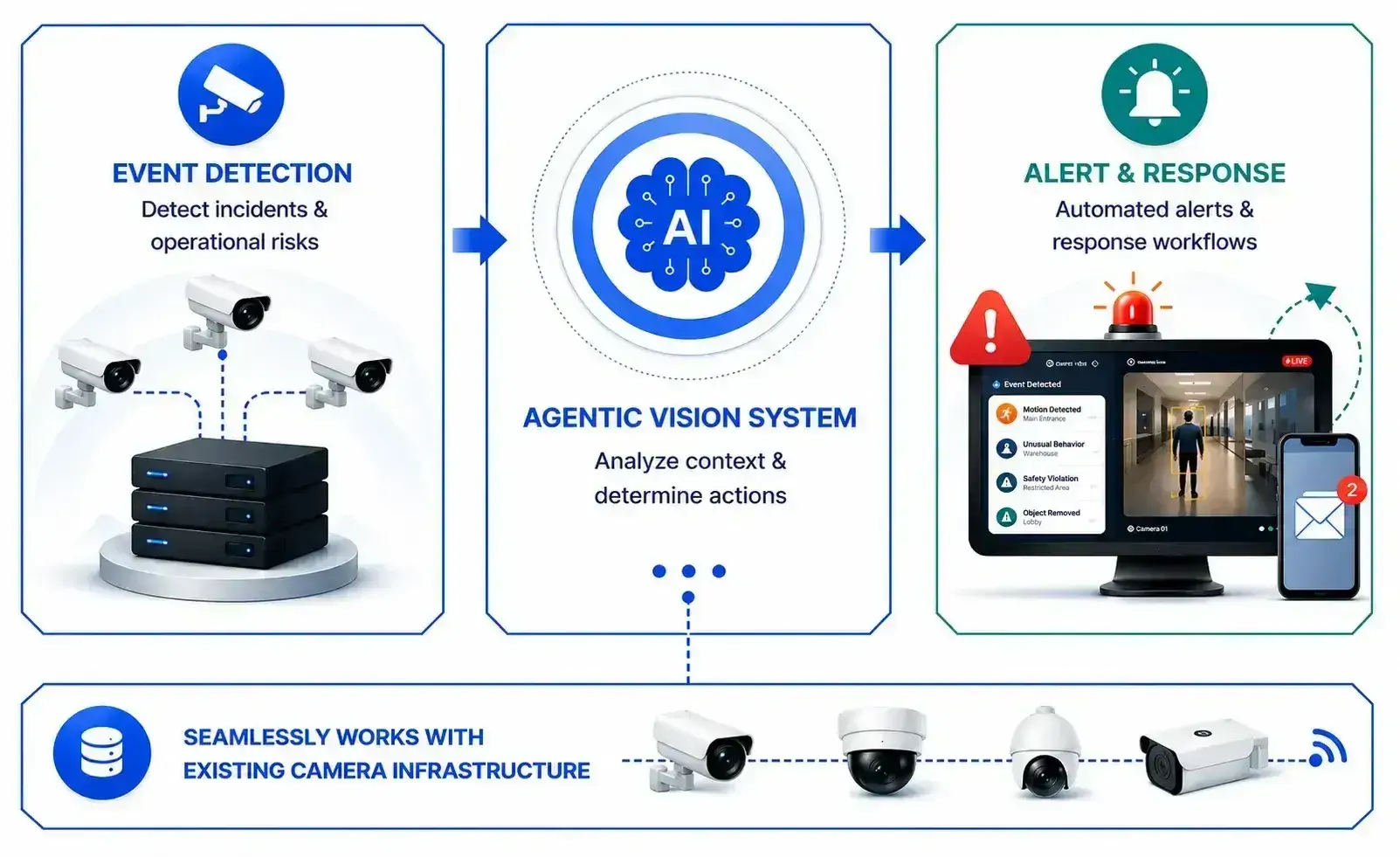
AI is shifting physical security from passive recording towards earlier detection, better situational awareness and more focused response. For Australian businesses, adding AI to compatible existing camera infrastructure can also be a more cost-efficient way to improve security capabilities without replacing an entire surveillance system.
For businesses considering these capabilities, explore KPS physical security solutions to see how AI and video technologies can be applied across different operating environments.
Start with the risks and operational problems the system needs to address, then assess whether the solution can work with your existing infrastructure. Businesses should also consider detection accuracy in real site conditions, integration capability, privacy and security requirements, workflow flexibility and how easily the system can adapt as operating needs change.
How can AI reduce the cost of physical security?
AI can reduce the amount of routine video monitoring required by automatically surfacing events that need attention. It can also help businesses get more value from compatible existing cameras, avoiding unnecessary infrastructure replacement while allowing operators to focus on investigation and response.
Can AI work with existing security cameras?
In many cases, yes. AI analytics can be added to compatible existing camera feeds through a VMS or dedicated AI layer, although factors such as image quality, camera positioning, network connectivity and the required use case will affect performance.
What can AI detect in security camera footage?
Depending on the technology, AI can identify people, vehicles and objects, analyse movement and behaviour, and detect unusual or context-specific events. Common applications include PPE monitoring, restricted-area entry, loitering, falls, smoke or fire, unattended objects and unsafe interactions between people and vehicles.
How does AI improve security response?
AI helps shorten the path from detection to action by continuously analysing video and bringing relevant events to operators as they happen. This allows security teams to verify incidents and respond sooner instead of relying on someone to notice the event during continuous camera monitoring.
References
[1] Safe Work Australia - Key Work Health and Safety Statistics Australia 2025.
[2] Safe Work Australia, Principles that apply to work health and safety duties.


Table of content

Related Insights
Employee Training and Development for Workforce Capability
Explore how enterprises can connect employee training, coaching and skills development to build workforce capability at scale....
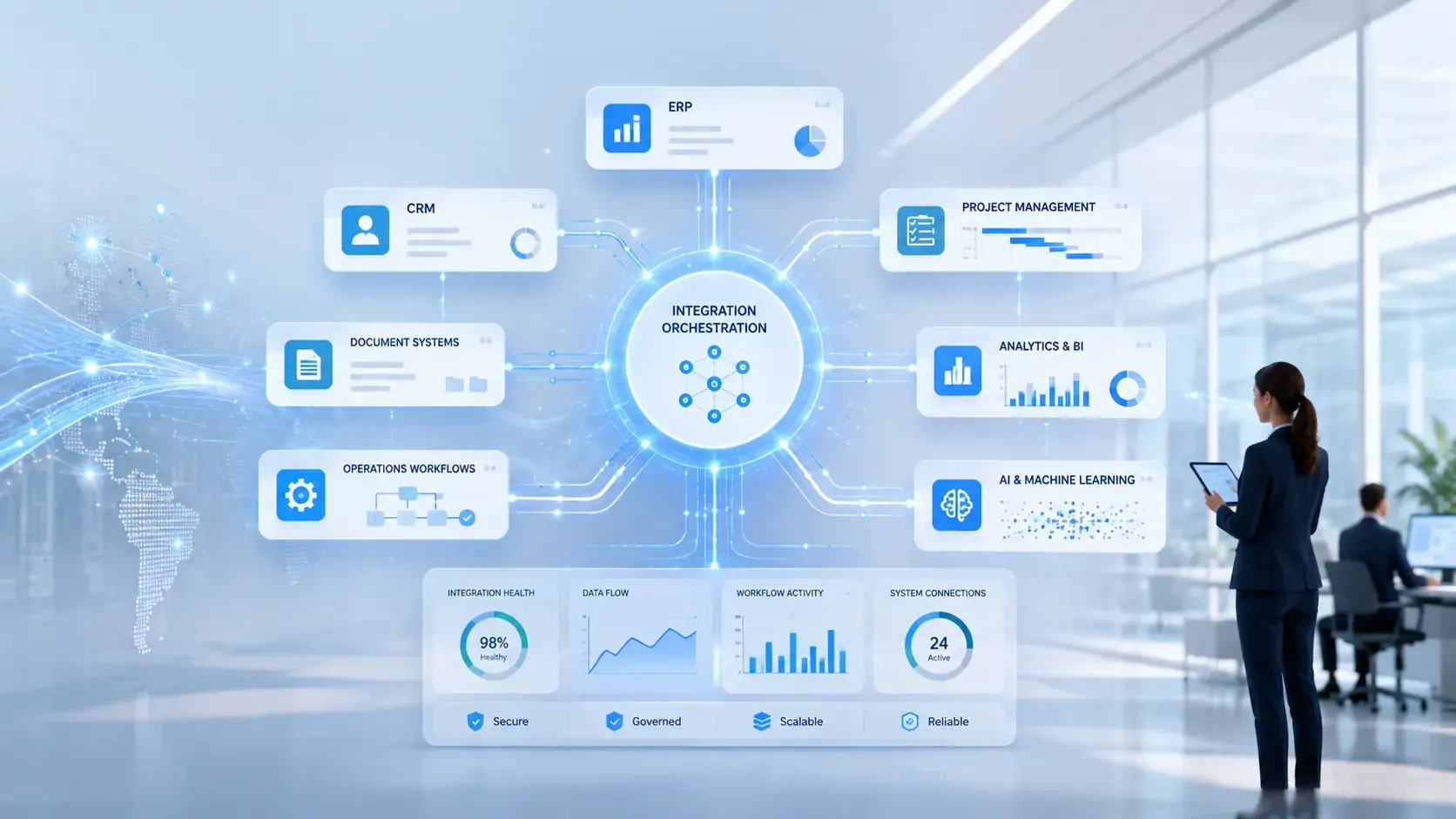
System Integration Solutions for Connected Operations
Discover how system integration solutions connect enterprise data, workflows and AI with existing systems to reduce fragmentation and improve operational visibility....

Digital Education Transformation for Scalable Education Delivery
Explore how digital education transformation helps education and training providers connect learning, operations, compliance and data for scalable delivery....

Let’s build what’s next for your business
Tell us about your business challenges, we’ll help you shape the right solution.

