
How to Choose an Enterprise Data Platform That Fits Your Business

Jun 19, 2026



Enterprise IT leaders in Australia face a persistent challenge: up to 68% of corporate data remains unanalyzed because legacy infrastructure cannot ingest fragmented formats effectively [1]. Your organization manages legacy databases, cloud applications, point-of-sale systems, and real-time streaming feeds. Forcing these disparate data sources into a rigid, predefined vendor framework leads to operational friction, slow query responses, and mounting cloud costs. Choosing the right enterprise data platform requires looking beyond feature checklists. You need a platform that aligns with your operational requirements, respects your security policies, and integrates with your current technology stack.
Different Enterprises, Different Data Environments
Every organization operates on a unique enterprise data infrastructure. Your core business processes dictate how information moves through your networks, from batch financial reconciliations in legacy databases to continuous sensor telemetry in production facilities. A modern enterprise data platform must process these distinct workloads without forcing you to re-architect your core systems. Built on Lakehouse, Data Fabric, and Data Mesh principles, flexible platforms handle both structured relational tables and unstructured streaming files. When a data platform solution respects your operational realities, your engineering teams spend less time building custom API adapters and more time delivering actionable intelligence to decision-makers.
Why One-Size-Fits-All Platforms Can Create Unnecessary Complexity
Off-the-shelf software vendors often force you to adjust your internal business processes to match their product design. Replacing functional legacy databases or modifying standardized operational workflows creates significant technical debt and user resistance. A rigid enterprise data architecture forces software engineers to write complex custom wrappers to connect mismatched data formats. This approach increases ongoing maintenance costs, degrades query performance, and delays operational deployment.
Approach | Existing Infrastructure | Business Requirements | Industry Requirements | Implementation |
One-Size-Fits-All | Forces environment modifications | Applies generic operating assumptions | Rigid core framework | Demands heavy custom coding |
Business-Fit | Adapts to current infrastructure | Tailors features to target workflows | Uses modular industry baselines | Utilizes pre-built connectors |
Different Industries Generate Different Data Requirements
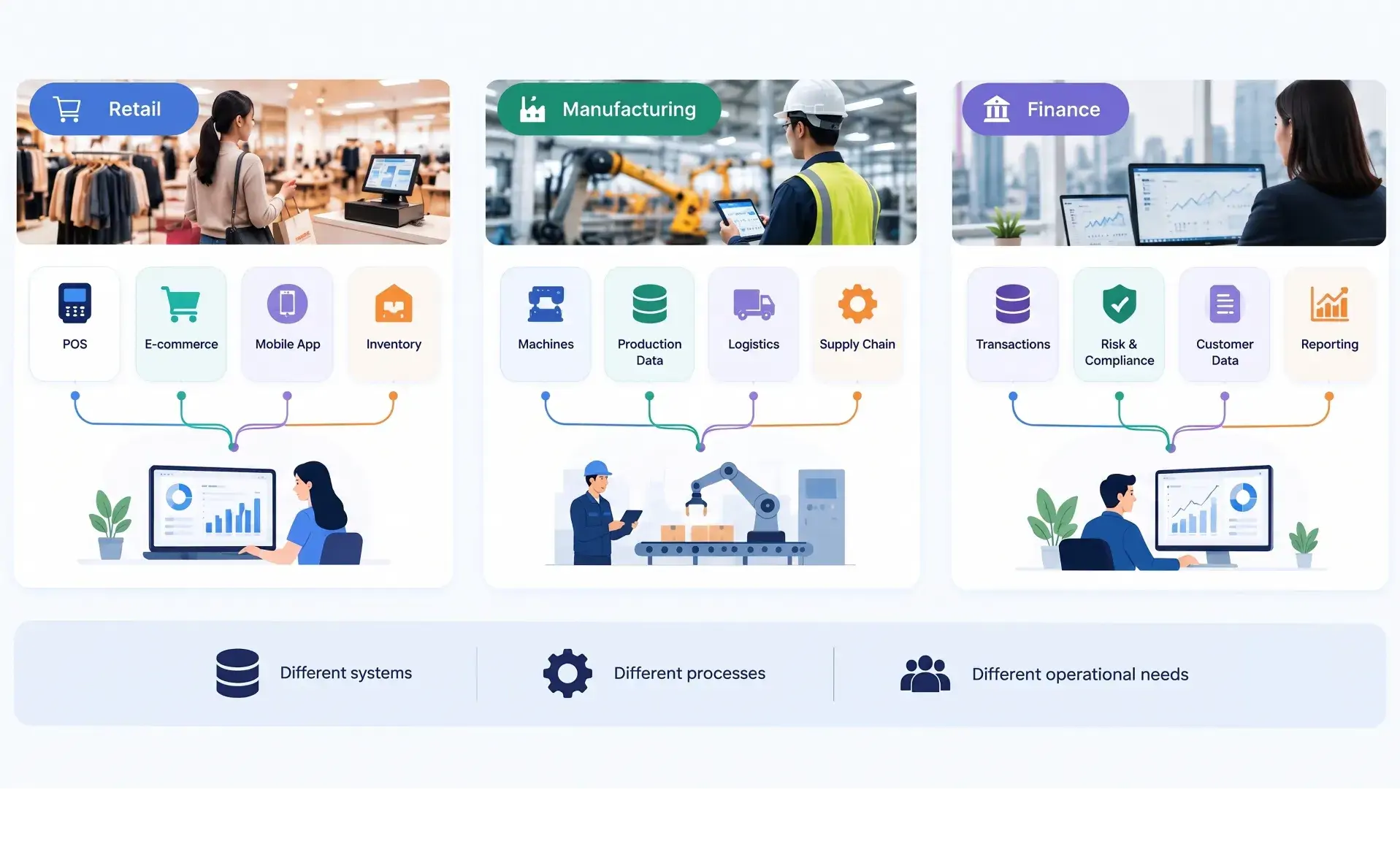
Australian operational environments vary significantly across commercial sectors [2]. Omnichannel retailers manage high-volume point-of-sale data, warehouse inventory counts, and customer transactions across physical stores and e-commerce applications. Mining and manufacturing organizations process high-frequency machine telemetry in remote sites where internet bandwidth is constrained. Financial institutions process live transaction streams while adhering to APRA regulatory standards and strict data auditability controls. Standard software packages fail because they ignore these industry-specific operational requirements and data velocities.
Existing Systems Add Another Layer of Complexity
Large enterprises have invested heavily in their current enterprise data infrastructure over many years [3]. Your existing enterprise resource planning systems, warehouse management software, customer platforms, and proprietary databases run daily operations. Implementing a modern enterprise data architecture should not require replacing these functional investments. The primary technical objective is constructing a centralized layer that ingests, cleanses, and standardizes data across all operational systems while keeping your underlying infrastructure intact.
From Industry Requirements to an Enterprise-Specific Platform
KPS starts with proven industry baselines and customises the underlying architecture around your exact technical constraints. Instead of forcing lock-in to a single public cloud provider, our solution architects configure environments compatible with Databricks, Microsoft Azure, Amazon Web Services (AWS), Google Cloud Platform (GCP), or private on-premises infrastructure. You can deploy our architecture across public cloud setups, private corporate servers, or specialized T-Box edge devices designed for remote sites with limited connectivity.
To evaluate how our modular architecture supports flexible enterprise deployments, explore the KPS Data Platform framework.
KPS Data Platform is designed to adapt to different industry environments rather than follow a single architecture across every enterprise. The data sources, operational challenges and business requirements can vary significantly between industries, so the platform approach needs to be adjusted accordingly. The Retail Insight Platform provides a practical example of how this approach can be applied to an omnichannel retail environment.
Retail Analytics Platform: Applying the Approach to Omnichannel Operations
Consider a major omnichannel retail client operating physical retail outlets alongside e-commerce websites and mobile shopping applications [4]. The organization struggled with fragmented data isolated in point-of-sale systems, warehouse management databases, and online platforms. This fragmentation prevented executives from obtaining a unified view of inventory levels and customer purchasing patterns.
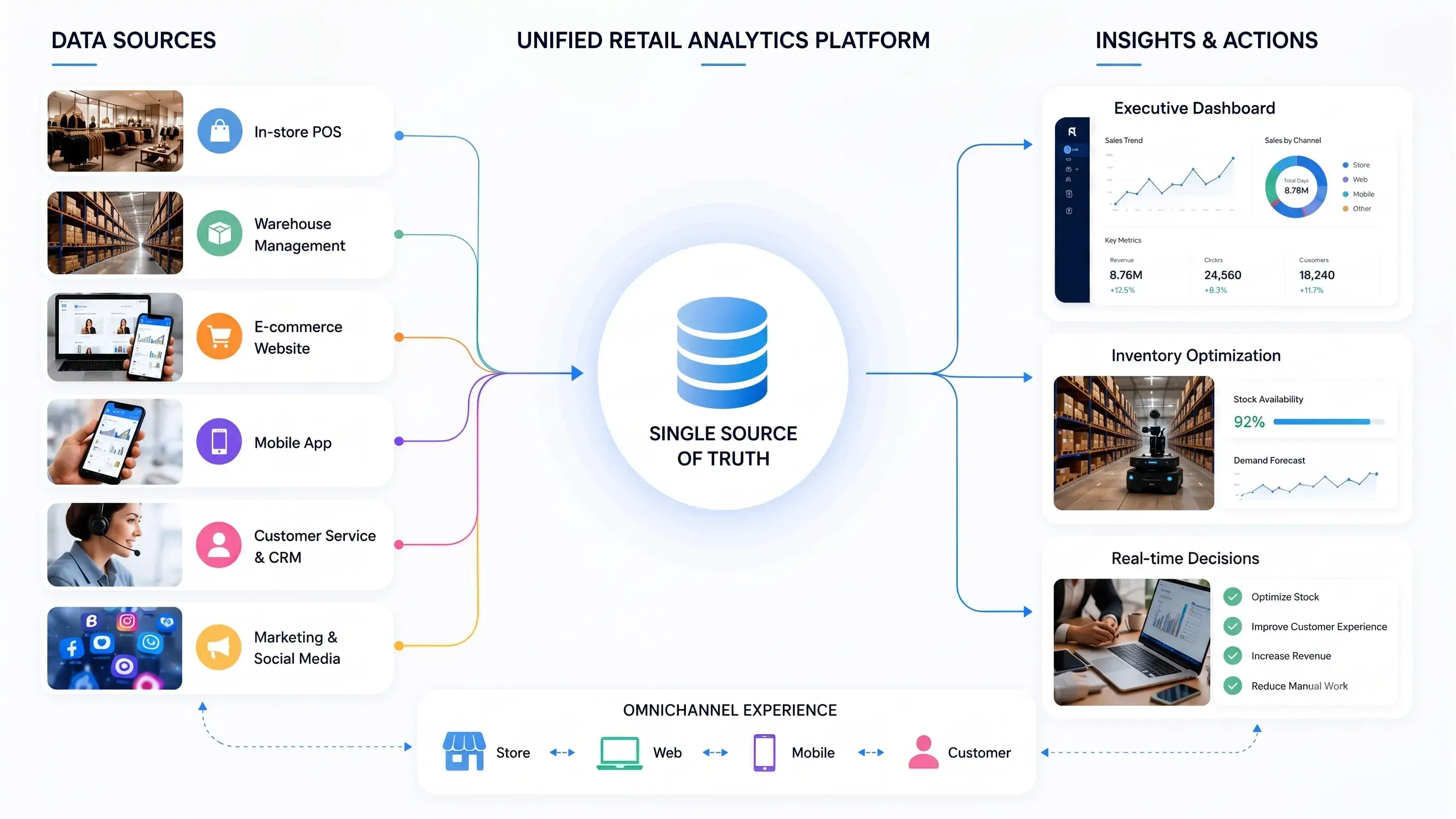
KPS deployed a centralized analytics platform that integrated data across all operational channels into a single source of truth. The platform automated data synchronization, established standardized performance metrics, and integrated AI-driven inventory analytics alongside executive performance dashboards. Consequently, leadership gained real-time operational visibility, optimized stock replenishment, and eliminated manual reporting processes. Review the Unified Retail Data Platform for Omnichannel Operations case study to examine this implementation in detail.
Reduce the Complexity of Building from Scratch
Building an enterprise-grade data engine from zero requires thousands of engineering hours spent configuring raw ingestion pipelines, schema validation, and workflow orchestration [5]. Utilizing a pre-designed data platform solution provides an immediate, reliable foundation. Your internal engineering team avoids re-inventing standard data connectors and pipeline frameworks, shifting their focus toward writing custom business logic that drives operational value.
Deploy Faster Without Compromising Business Fit
A flexible enterprise data architecture shortens your implementation cycle significantly. By combining pre-tested processing components with custom API connectors, you can operationalize a tailored enterprise data platform in weeks rather than months. This practical approach accelerates time-to-value while ensuring the solution conforms strictly to your technical requirements.
Create a Platform That Can Evolve with the Business
Your technology requirements will inevitably evolve as your business grows. A modular data platform solution decoupled from proprietary cloud tools prevents vendor lock-in. You retain complete ownership of your data models, pipeline code, and infrastructure strategy, ensuring your enterprise data architecture scales seamlessly alongside your long-term digital transformation objectives.
Selecting an enterprise data platform is an architectural decision that directly impacts your operational efficiency and business speed. Prioritise business fit over vendor feature claims. A customizable platform adapts to your current enterprise data infrastructure, accelerates deployment timelines, and scales alongside your enterprise requirements.
Contact the engineering specialists at KPS Solutions to evaluate your current technology architecture and design a tailored data platform deployment strategy.
What should enterprises look for in an enterprise data platform?
Focus on compatibility with your existing infrastructure, deployment flexibility across cloud or on-premises environments, granular role-based access security, and customizable architecture. Avoid platforms that require you to replace functioning legacy applications or alter core operational workflows.
Can an enterprise data platform work with existing infrastructure?
Yes. A business-fit platform uses open data standards and flexible API connectors to integrate directly with your current enterprise resource planning systems, databases, and core software applications without requiring an infrastructure rebuild.
Why do data platform requirements differ across industries?
Operational processes, data velocities, and regulatory standards vary by sector. Retailers require real-time inventory and omnichannel tracking, manufacturers need low-latency IoT machine telemetry, and financial institutions demand strict data auditability and fraud detection controls.
Is it better to build an enterprise data platform from scratch?
No. Custom ground-up development increases initial engineering costs, introduces maintenance risks, and delays deployment. Starting with a modular data platform solution foundation delivers a proven baseline while allowing full customisation for your specific business logic.
How should executives evaluate vendor reliability for long-term scalability?
Evaluate whether the vendor offers full data ownership, open architecture standards, flexible deployment models (cloud, on-premises, edge), and demonstrated solution engineering expertise in integrating complex, multi-system enterprise environments without vendor lock-in.
References
[1] Gartner - Market Guide for Enterprise Data Platforms 2026.
[2] McKinsey & Company - Capturing Value from Enterprise Data Architectures 2025.
[3] Harvard Business Review - Overcoming Legacy Infrastructure Bottlenecks 2025.
[4] Statista - Australian Enterprise IT Infrastructure Benchmarks 2026.
[5] Wall Street Journal - Operational Efficiency in Complex Tech Stacks 2025.


Table of content

Related Insights
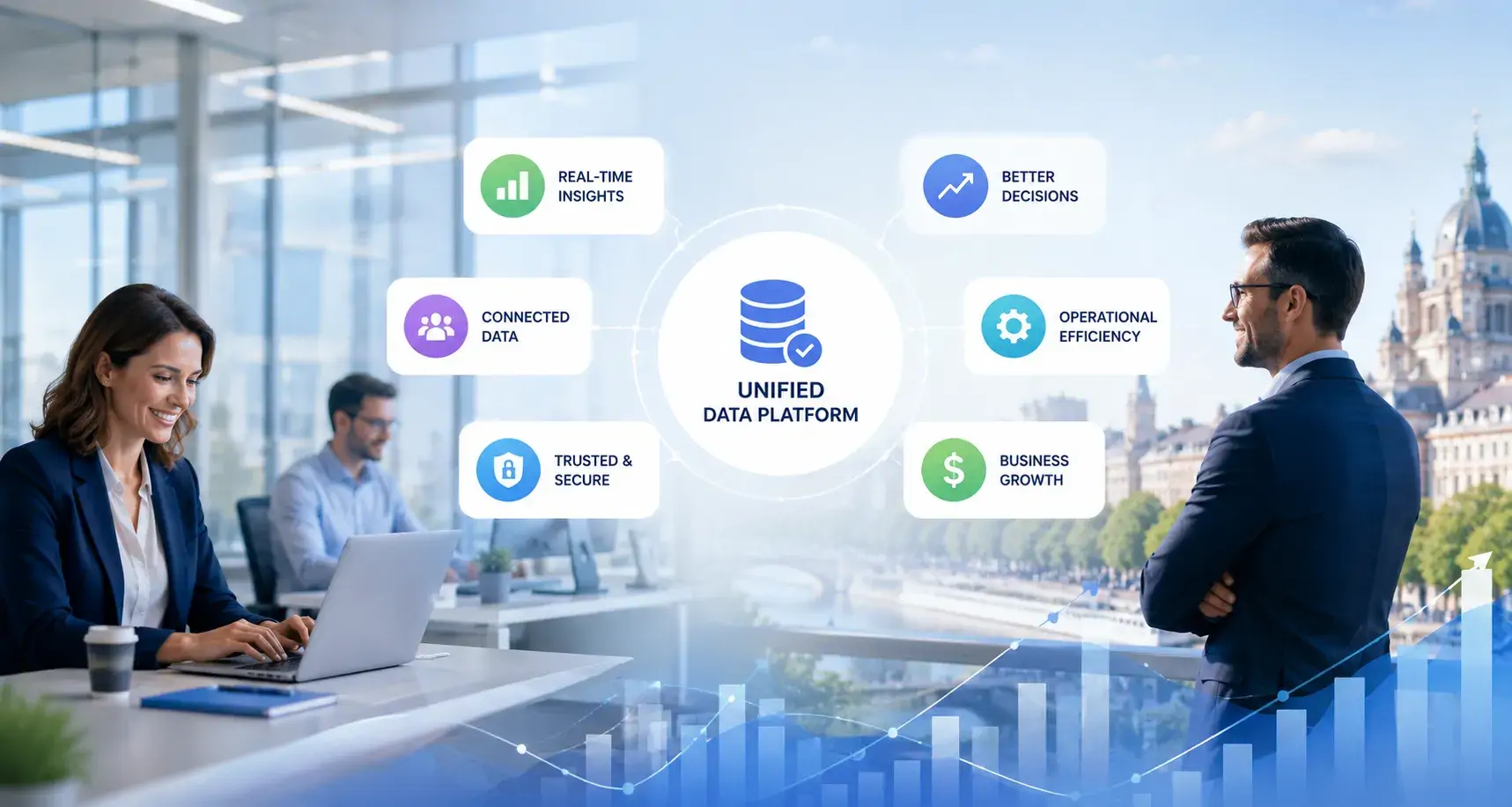
Enterprise Data Management: Building a Unified Data Foundation
Discover how enterprise data management helps organisations connect fragmented data, build a unified data foundation, and support better business decisions....
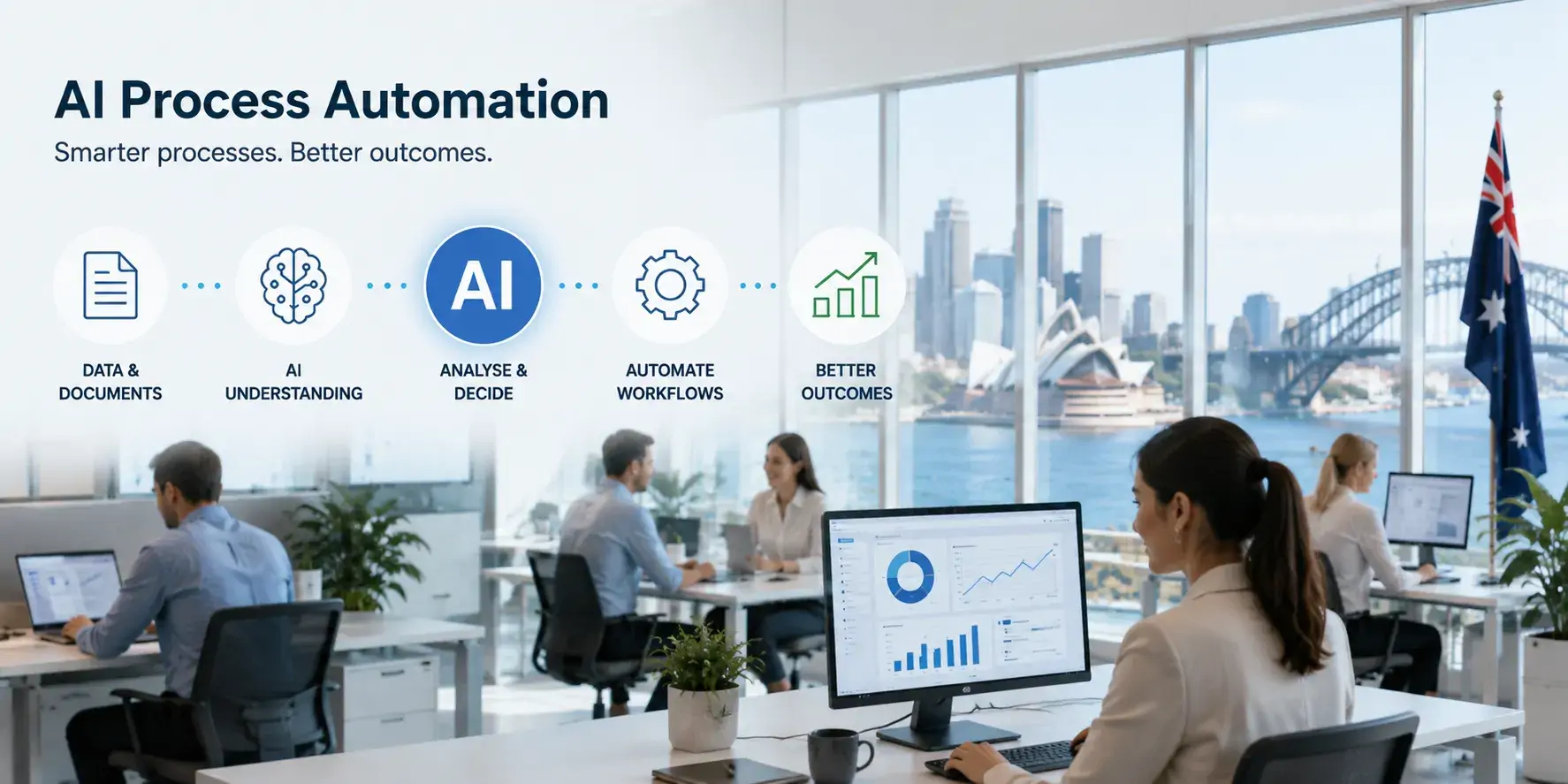
AI Process Automation for Australian Enterprises: Key Use Cases
Explore key AI process automation use cases for Australian enterprises and how AI can streamline operations, improve productivity, and scale business processes. ...
Business Workflow Automation: From Documents to Faster Processes
See how business workflow automation turns document data into validated workflows with fewer manual steps, clearer exceptions and better integration....

Let’s build what’s next for your business
Tell us about your business challenges, we’ll help you shape the right solution.

