
Beyond Security: How Video Intelligence Is Changing Security Industry Trends

Jun 19, 2026



Cameras have long supported physical security by monitoring sites, detecting incidents and providing evidence. That role is expanding: the 2026 Axis Perspectives Report found that security remains the primary video use case for 89% of surveyed end users, while 42% use video for operational efficiency and 38% for business intelligence [1].
This reflects a broader shift in security industry trends, as video increasingly becomes a source of operational information rather than simply recorded evidence. AI enables cameras and edge devices to analyse visual information and generate insights for business intelligence and operational efficiency [2]. The opportunity is not to replace security, but to extend existing video infrastructure to support security, safety and better operational decisions.
From Security Evidence to Real-Time Information
Traditional surveillance is largely retrospective: teams monitor cameras, respond to incidents and review footage to establish what happened. Intelligent video can analyse activity in real time, helping organisations identify what is happening and what may require attention. This shifts video from a passive record to an active source of operational information - a key development in security industry trends as organisations seek more value from existing infrastructure.
Cameras as Sources of Operational Information
IP cameras and intelligent edge devices are increasingly used as real-time data sources, with AI helping interpret visual information to support business intelligence and operational efficiency [2].
Depending on the use case, this may include people and vehicle movement, occupancy, customer flow and safety events. This extends ai in security industry applications beyond conventional monitoring: cameras capture visual information, while ai camera analytics interprets it to support operational decisions.
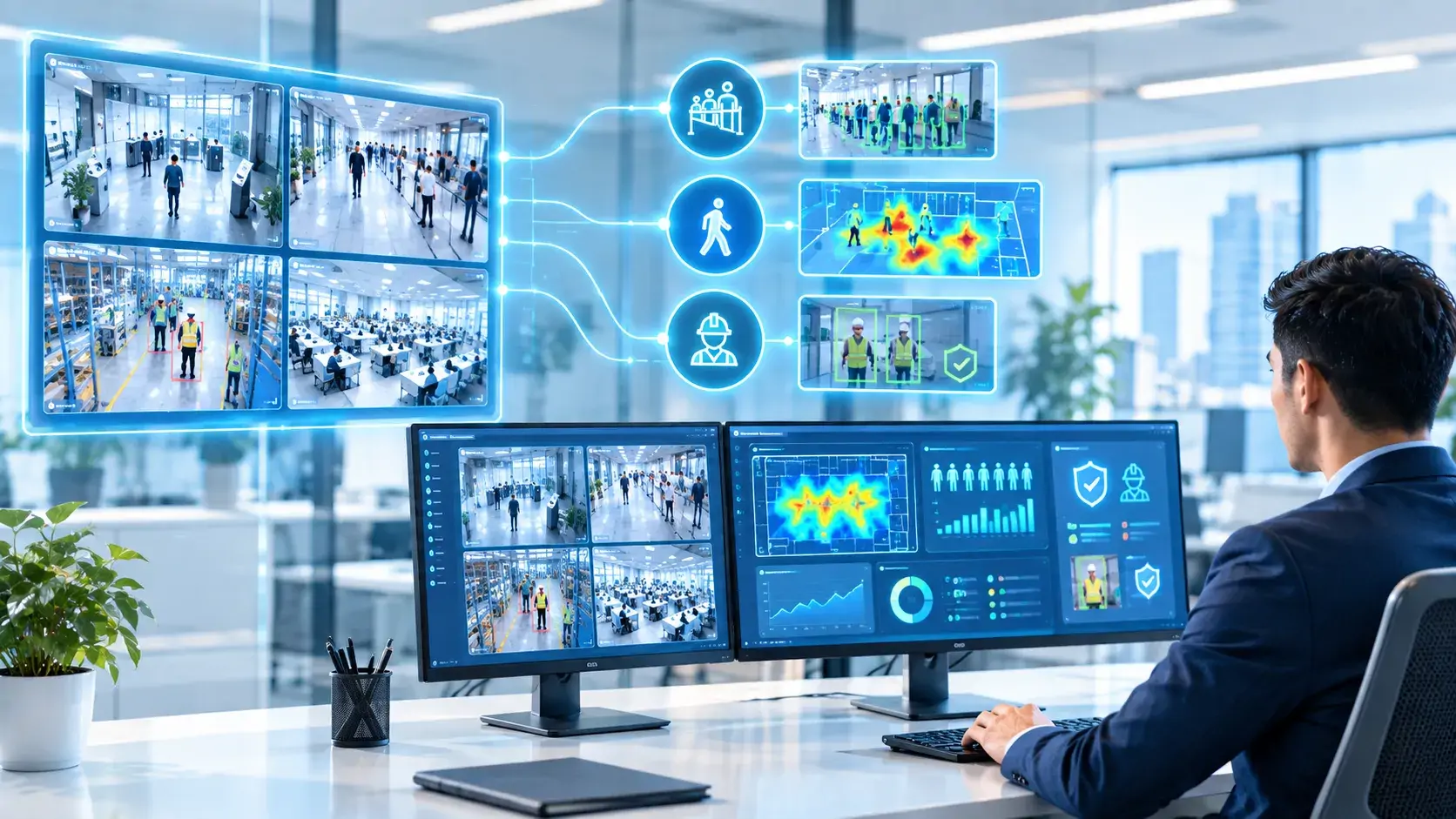
From Video Data to Operational Intelligence A practical architecture connects physical activity with AI analysis and business decisions:
Physical Environment → Camera & Sensors → AI x Video Intelligence
→ Operational Insights → Business Decisions
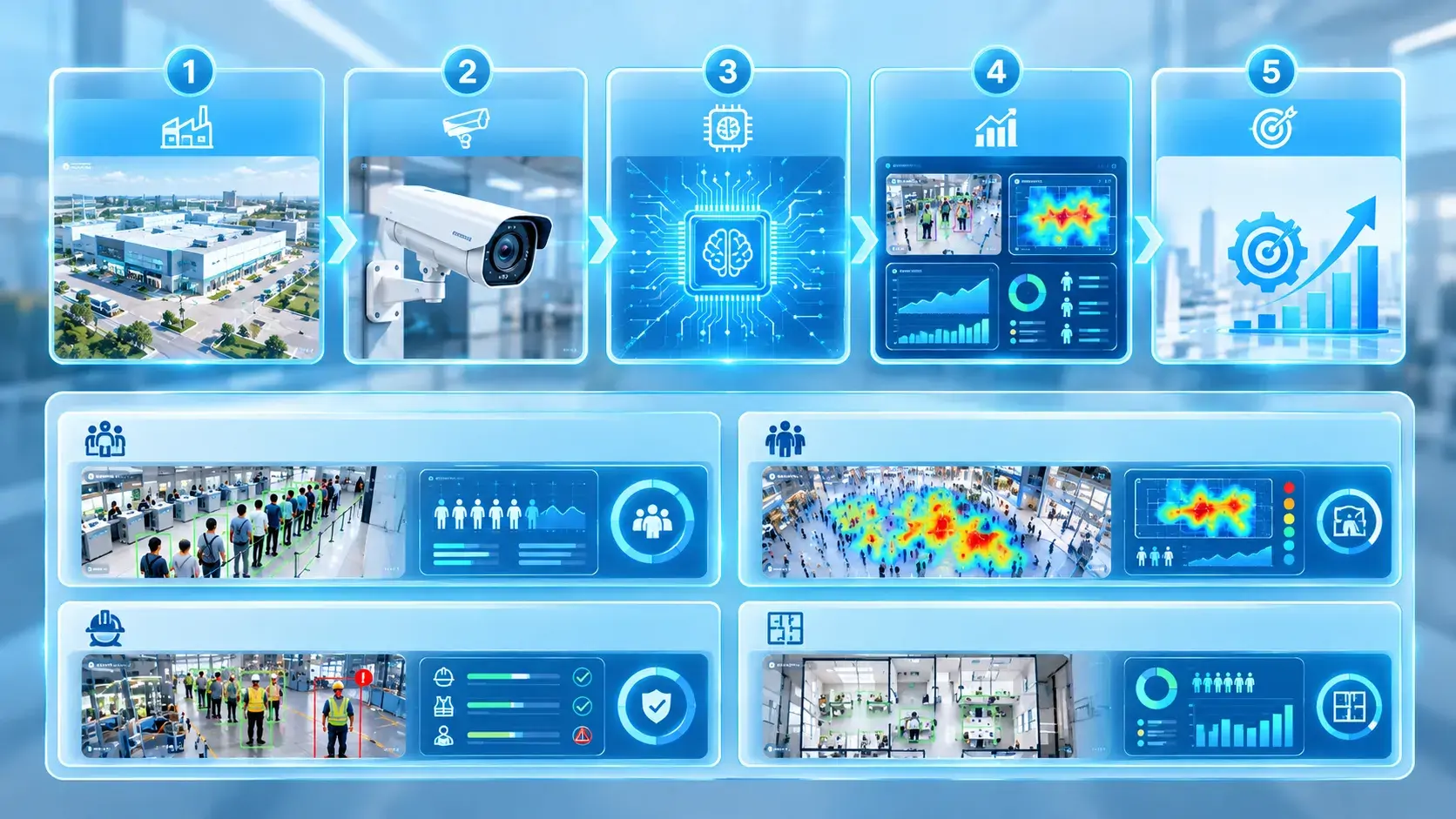
Capture What Is Happening
Cameras continuously capture information from the physical environment. Existing cameras, VMS infrastructure and networks can provide the foundation for accessing and processing this data. The goal is not more footage, but relevant information for a defined use case.
Turn Visual Information into Measurable Signals
AI camera analytics and video analytics software can identify defined conditions such as people and vehicle movement, occupancy, queues, congestion and safety events. Effectiveness depends on factors including camera positioning, image quality, lighting and the use case.
Connect Insight to Operational Decisions
Video-derived information creates value when it helps answer a business question.
Video insight | Operational question | Potential action |
| Increasing queues | Is service capacity sufficient? | Adjust staffing |
| Repeated congestion | Where is workflow slowing? | Optimise process or layout |
| PPE non-compliance | Where are safety gaps recurring? | Strengthen controls |
| Occupancy patterns | How is space being used? | Improve resource planning |
Combining video with operational data can support efficiency, compliance, staffing and customer experience [3]. This expands security data analytics from incident analysis towards broader operational decision-making, reflecting how security industry trends are moving towards more connected uses of video.
The objective is not to apply AI everywhere. It is to identify where visual information can solve a meaningful operational problem.
Security | Intrusions, access events, unusual activity | Faster detection and response |
| Safety & compliance | PPE, unsafe behaviour, zone violations | Proactive risk management |
| Operations | Traffic, congestion, workflow, resource use | Process optimisation |
| Customer experience | Foot traffic, queues, dwell patterns | Service optimisation |
| Business intelligence | Trends, patterns, space utilisation | Better decision-making |
Security remains foundational, while operational efficiency and business intelligence are expanding applications [1]. For organisations assessing security industry trends, the more useful question is not simply “What can AI detect?” but “Which information could improve an operational decision?”.
Security Infrastructure Can Support More Than Security
Existing camera networks can support more than security, including safety, process monitoring and operational efficiency. With the right infrastructure and analytics, organisations can extend existing systems without necessarily replacing them. This reflects broader security industry trends towards extracting more value from existing surveillance infrastructure.
When introducing video analytics software, assess camera compatibility, image quality, analytics capability and the intended use case before upgrading or replacing infrastructure.
Connecting Video With the Wider Operational Environment
Video becomes more valuable when combined with operational data such as transaction volumes, staffing, access control and IoT sensors. This allows security data analytics to move beyond isolated incident analysis towards identifying patterns and conditions across the physical operation.
The goal is not more video data, but making video-derived insights actionable within the wider operational environment.
From Reactive Evidence to Continuous Insight
Traditional surveillance is largely retrospective: an event occurs, then footage is reviewed. The emerging model is more continuous. Intelligent video can surface relevant activity as it occurs and provide information for ongoing decisions. Current research shows video use expanding across security, safety, business intelligence and operational efficiency [1].
This is one of the defining security industry trends: surveillance infrastructure can retain its security role while contributing information to wider business processes.
Toward More Connected Physical Operations
Video can become one information source within a wider operational technology environment. Connecting it with other data and workflows can provide greater context to security, operations and technology teams.
As AI in security industry applications develop, organisations can connect detection with structured workflows while maintaining human oversight where risk or context requires it. This reflects broader security industry trends towards more connected, data-driven physical operations, where AI provides timely, contextual information to support-not replace-human decisions.
The shift from video as a security record to video as an operational information source is already reflected in how KPS applies intelligent video technology to real-world environments.
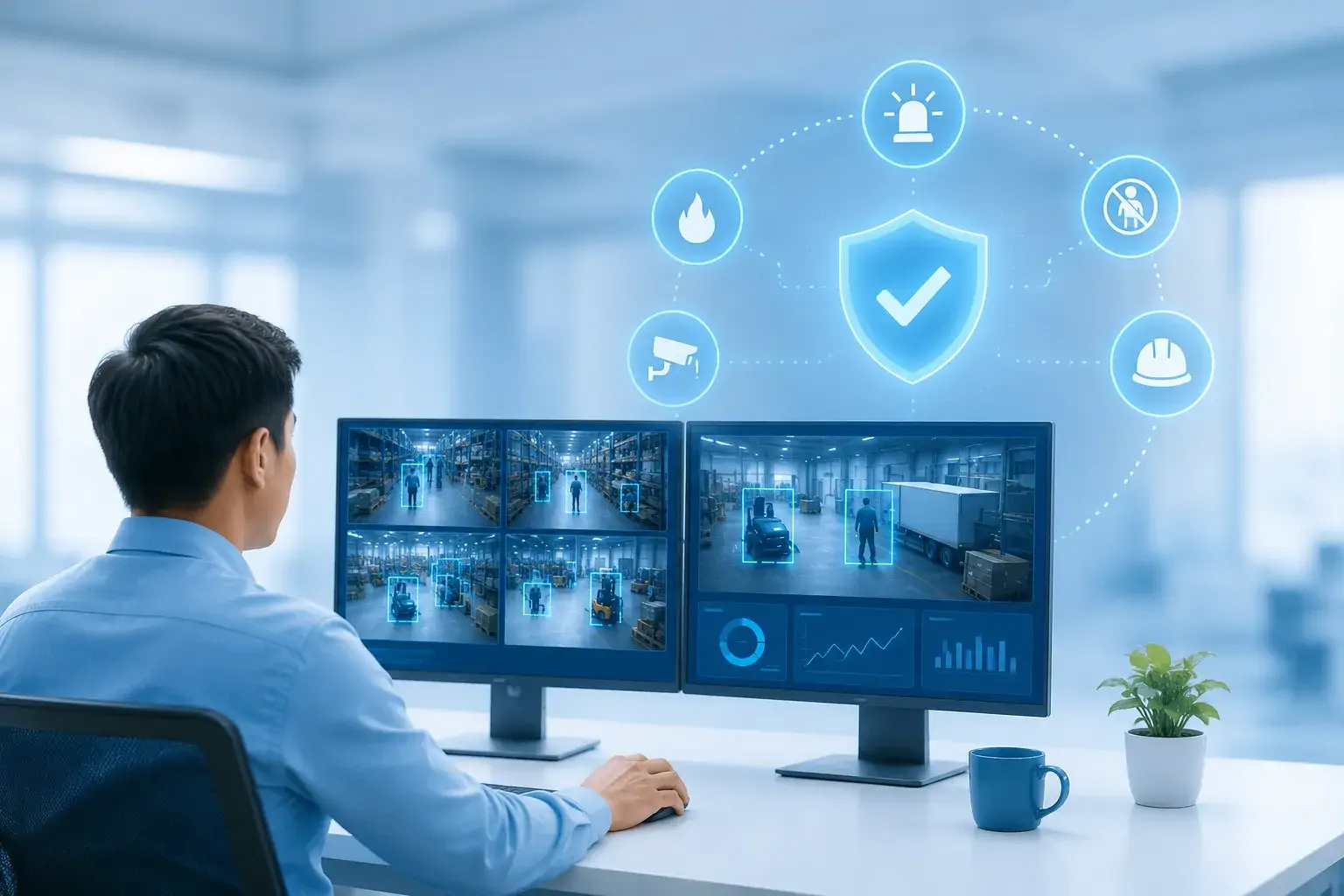
In a heavy manufacturing and logistics operation, the challenge was not a lack of cameras, but the limitations of manual patrols: delayed emergency response, human error and limited actionable safety information. KPS integrated AI-driven analytics with the facility’s existing security infrastructure and centralised monitoring through an AI-powered Video Management System. The system detects PPE non-compliance, collisions, speeding and zone violations, brings incidents into a central Alert Center for review, and turns safety data into KPI tracking, incident analysis and safety trend reporting. KPS’s Video Management System centralizes live streaming, recording and footage retrieval while adding AI-based detection, centralised alerts, zone management and safety analytics.
Meanwhile, Agentic Vision addresses a different part: what happens when detected events need to trigger a defined response. It combines AI detection with configurable rules, workflow automation, multi-channel notifications, evidence logging and assisted decision support. Its use cases include warehouse safety, workplace compliance, vehicle operations and building incidents, showing how video intelligence can be connected to operational workflows rather than remaining within the security team alone.
Together, these capabilities demonstrate how KPS approaches the broader security industry trends identified above: VMS helps organisations manage, interpret and act on video at scale, while Agentic Vision focuses on connecting detected events with defined operational responses. The common principle is not replacing security infrastructure, but making existing visual data more useful across the wider operation.
1. What Is Video Intelligence in Security?
Video intelligence refers to using AI and analytics to extract useful information from video, such as defined events, behaviours, movement or patterns, and use that information to support security or operational decisions.
2. How Is AI Changing the Role of Security Cameras?
AI enables cameras and associated analytics systems to analyse visual information and identify defined objects, events, behaviours or patterns beyond traditional recording [2].
3. Can Video Analytics Be Used Beyond Security?
Yes. Applications increasingly include safety, operational efficiency and business intelligence alongside traditional security uses [1]. Video analytics software can be configured around specific operational requirements.
4. What Is the Difference Between Video Analytics and Operational Intelligence?
Video analytics extracts information from visual data. Operational intelligence uses that information, often with other data, to understand conditions, identify patterns and support decisions.
5. How Should Organisations Evaluate a Video Intelligence Solution?
Evaluate the operational use case, existing infrastructure, analytics capability, integration, scalability, privacy requirements and the workflow that will use the resulting insight.
References
[1] Axis Communications. Axis Perspectives 2026: The intelligent edge.
[2] Axis Communications. How AI-powered cameras are redefining business intelligence. 2026.
[3] Security Industry Association. The Rise of Vision-Enabled Operations. 2025.


Table of content

Related Insights
Employee Training and Development for Workforce Capability
Explore how enterprises can connect employee training, coaching and skills development to build workforce capability at scale....
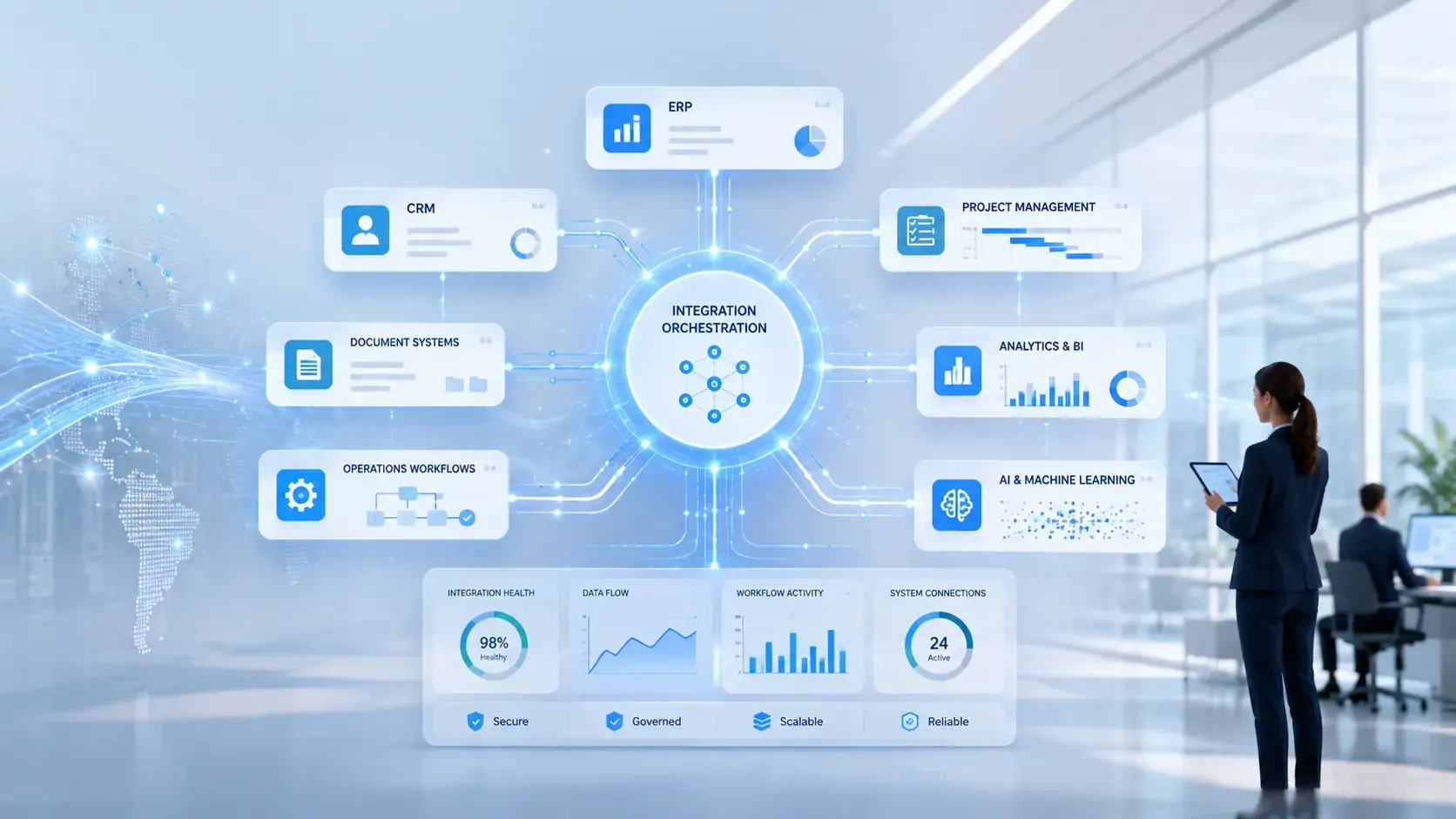
System Integration Solutions for Connected Operations
Discover how system integration solutions connect enterprise data, workflows and AI with existing systems to reduce fragmentation and improve operational visibility....
AI in Physical Security: Smarter Security for Australian Enterprises
Explore how AI in physical security transforms CCTV into intelligent monitoring with real-time threat detection, video analytics and smarter security for Australian enterprises....

Let’s build what’s next for your business
Tell us about your business challenges, we’ll help you shape the right solution.

