
Embedded PQC for Devices
Build quantum-safe connections into new devices, even on low-cost microcontrollers, before they ship.
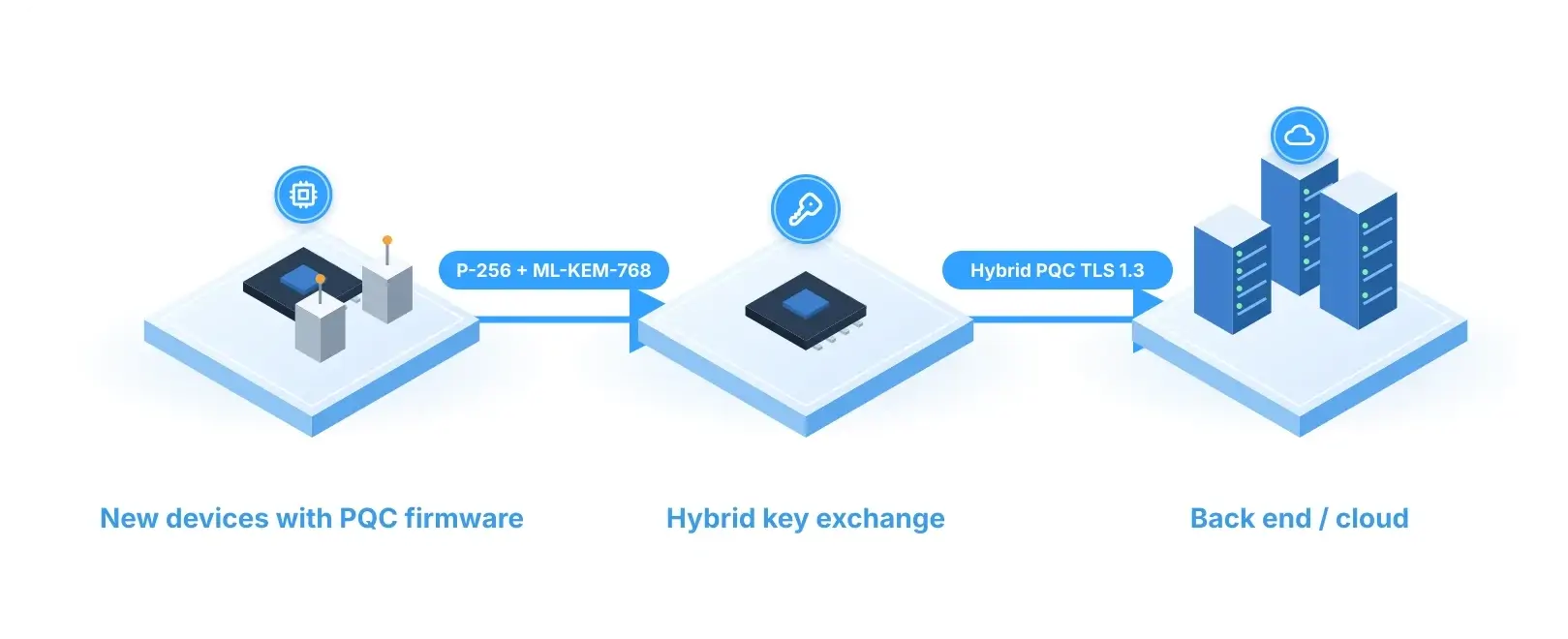
Quantum-safe from the first day in the field
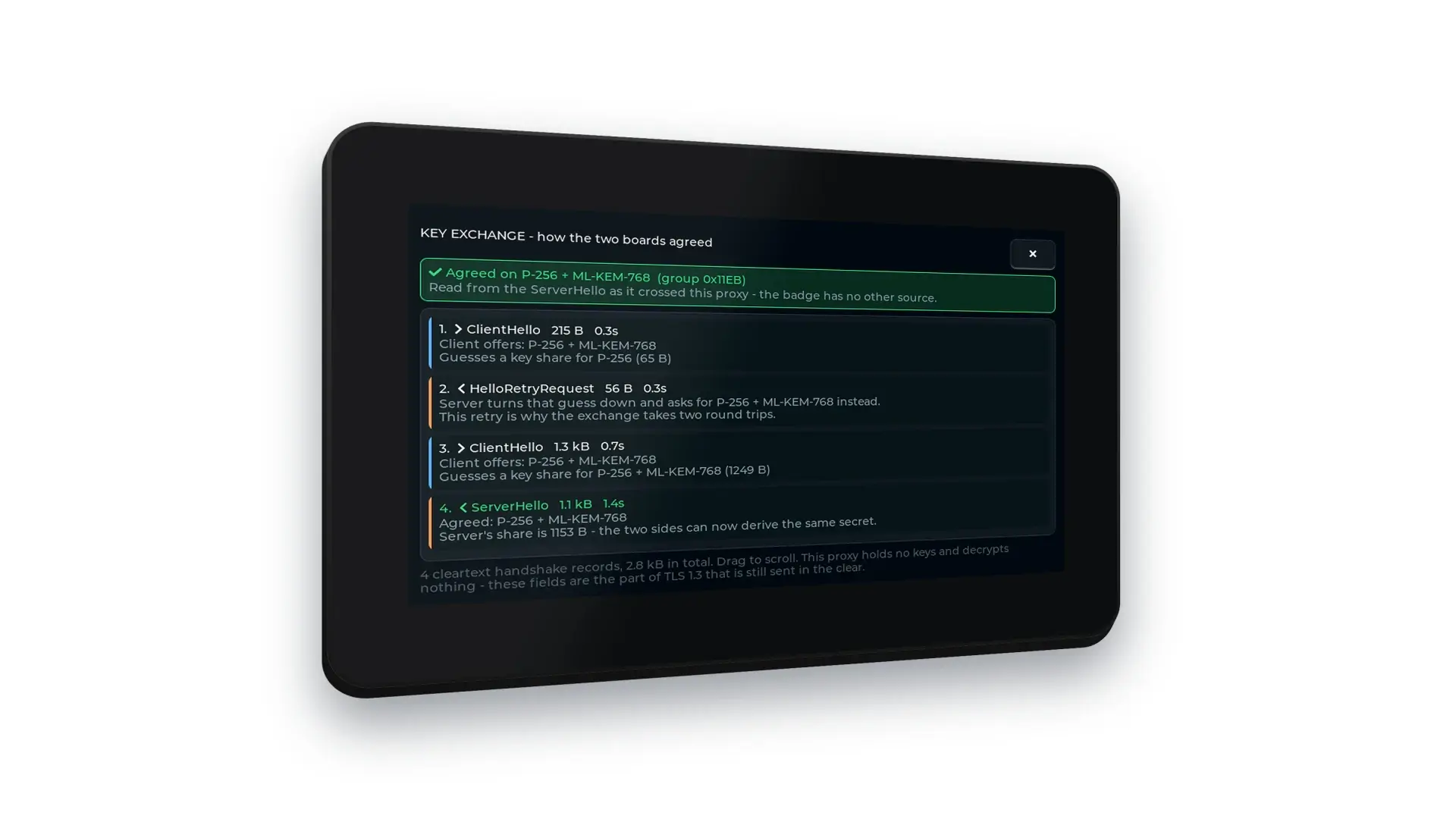
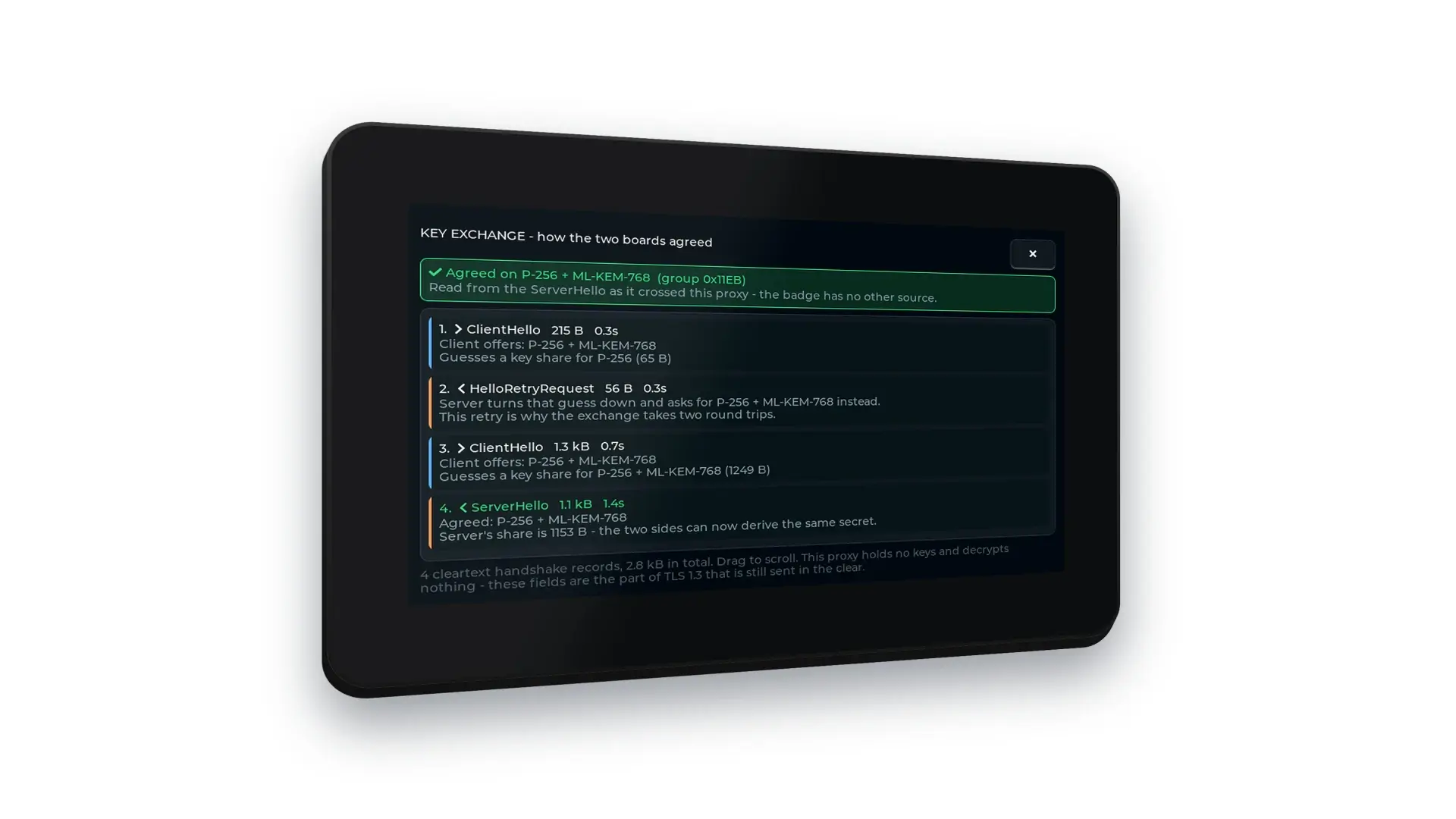
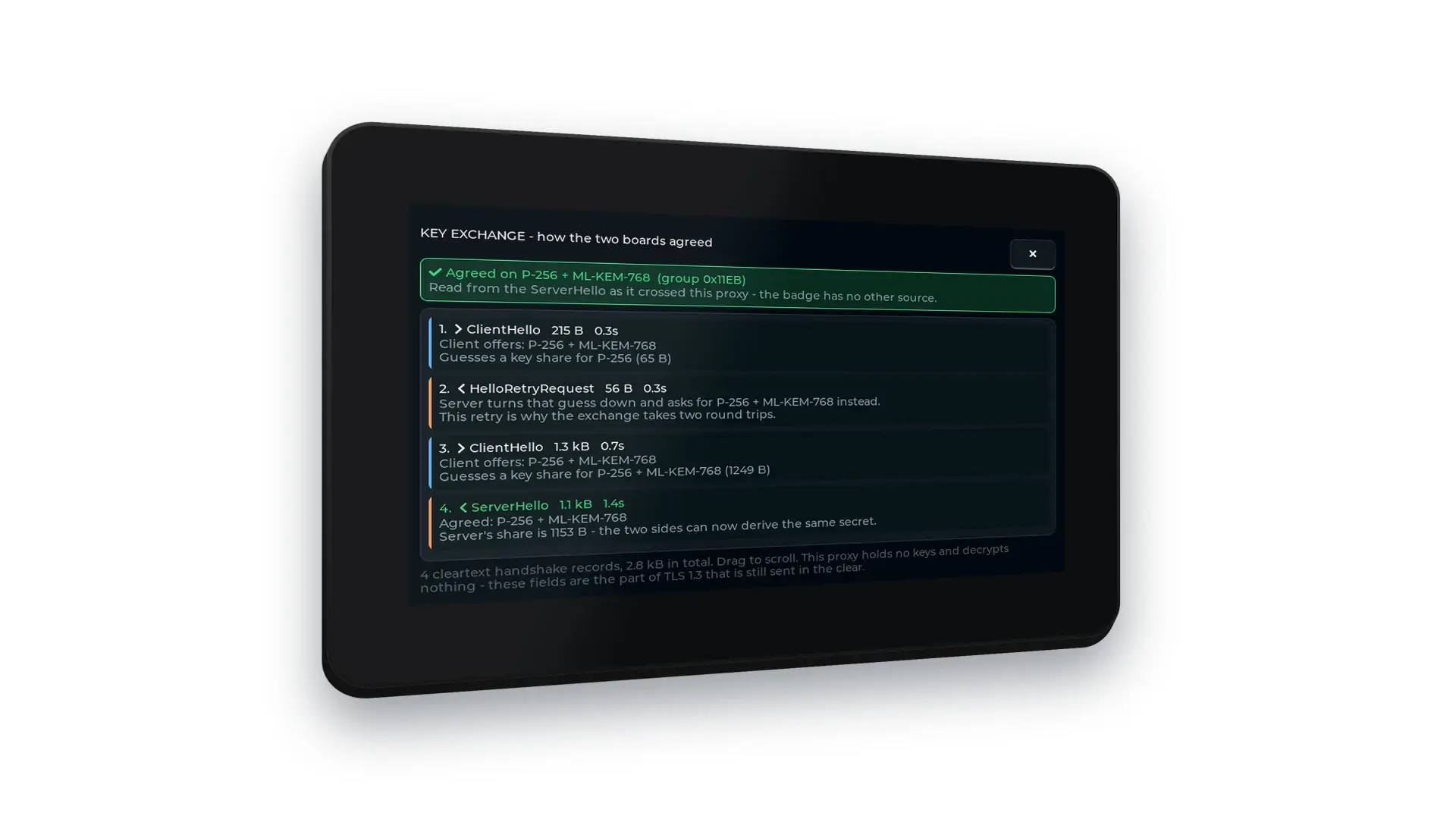
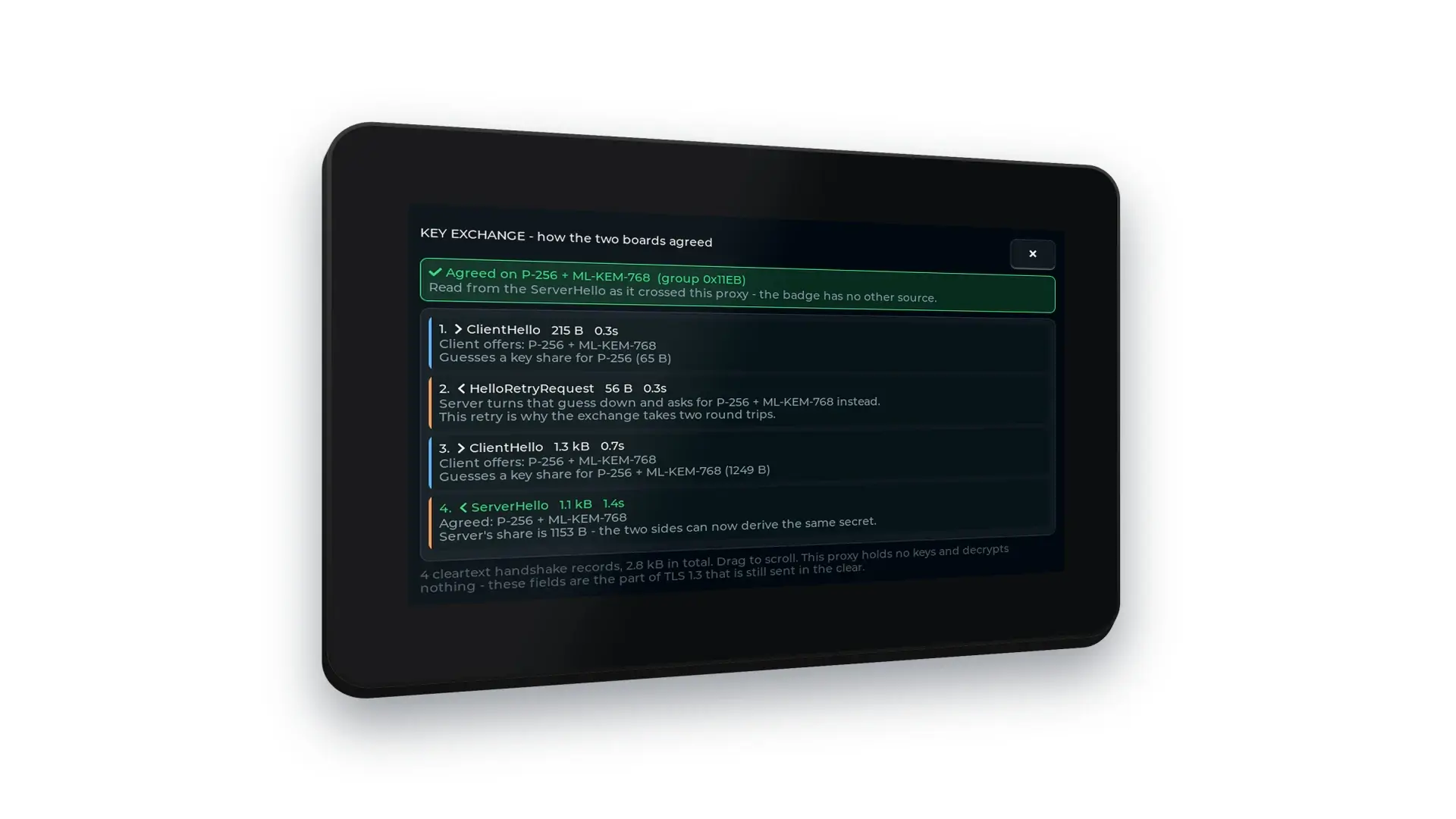
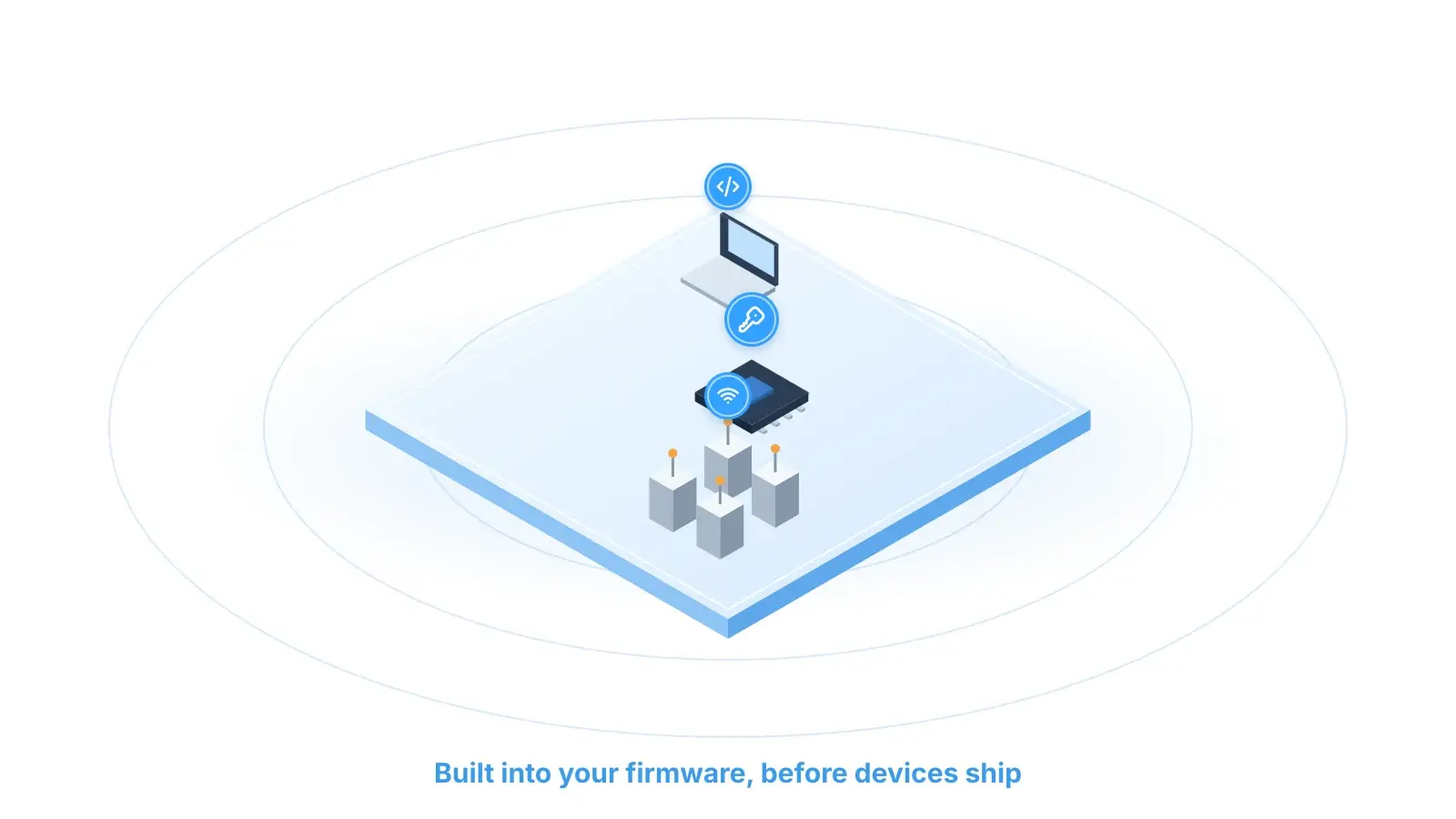
Connected devices often stay in service for ten years or more, and many are hard to update once deployed. A device that ships today with only classical encryption may still be running when quantum computers can break it. The Embedded PQC SDK lets device teams add hybrid post-quantum TLS 1.3 (P-256 + ML-KEM-768) to their firmware, so devices connect to the back end with quantum-safe key exchange from day one.
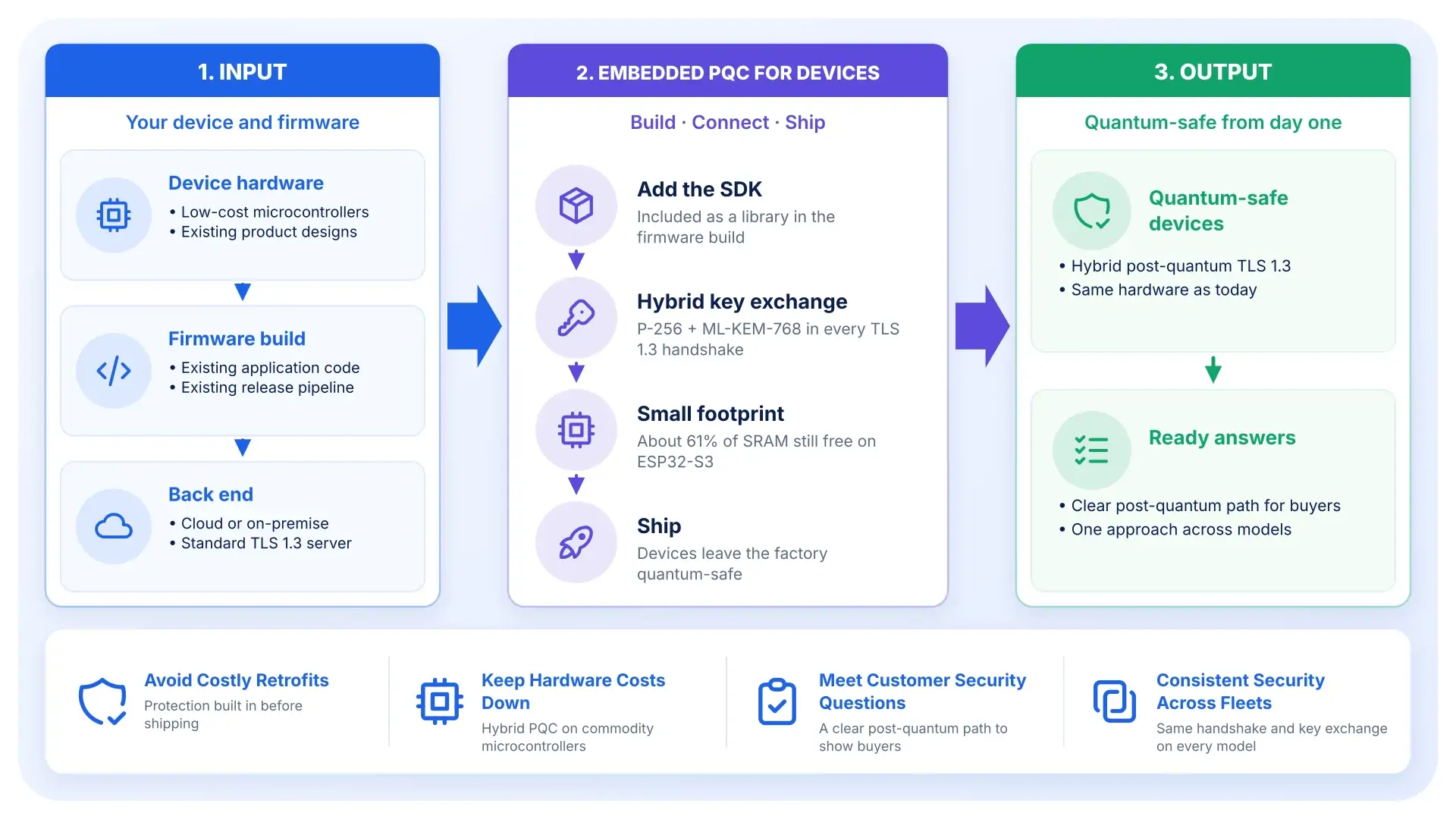
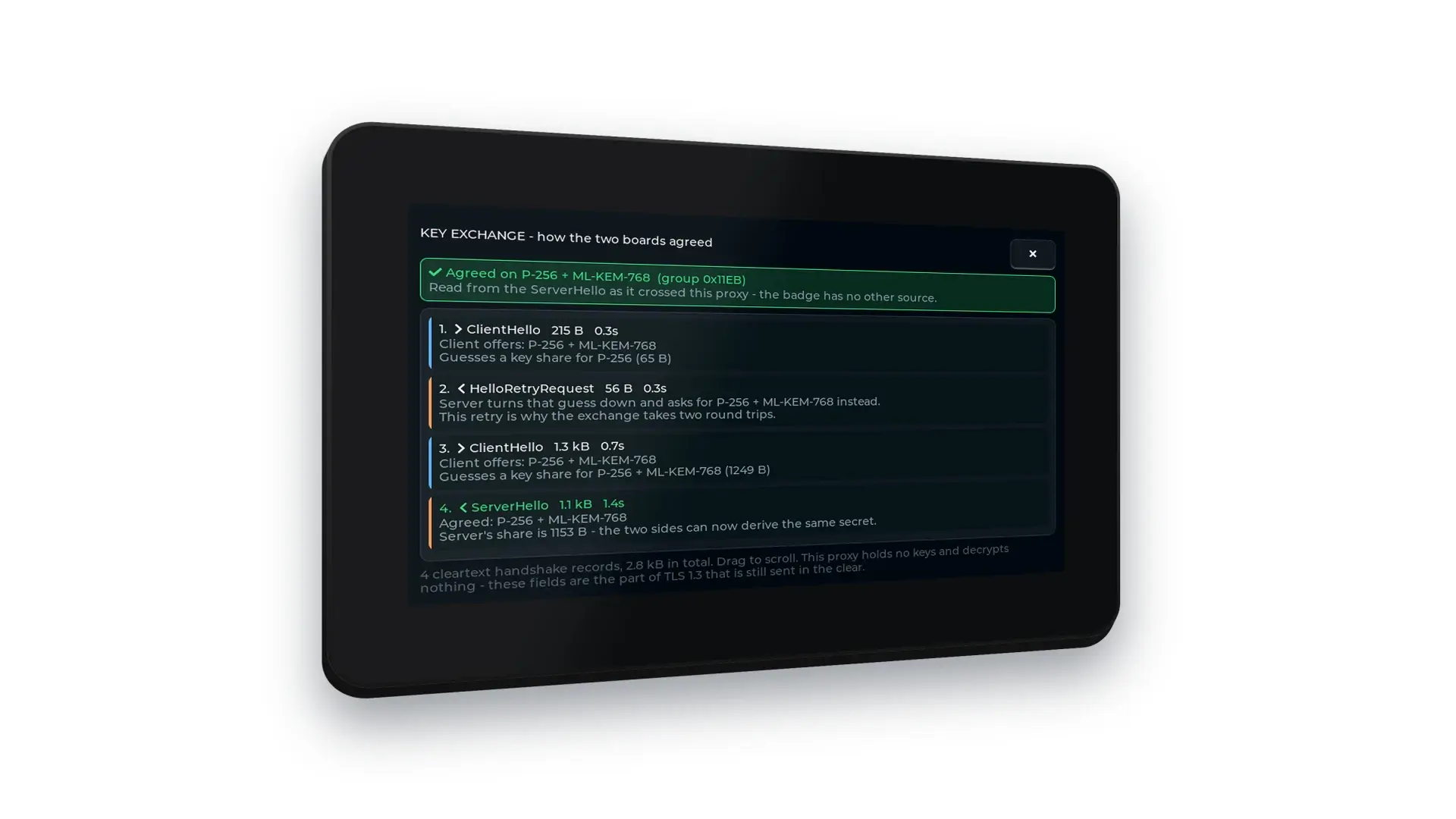
Hybrid post-quantum TLS 1.3 handshake in device firmware (P-256 + ML-KEM-768)
Validated on a low-cost ESP32-S3 microcontroller, with about 61% of on-chip SRAM still free
Works with standard TLS on the server side, so the back end needs no special stack
Hybrid post-quantum TLS 1.3 handshake in device firmware (P-256 + ML-KEM-768)
Validated on a low-cost ESP32-S3 microcontroller, with about 61% of on-chip SRAM still free
Works with standard TLS on the server side, so the back end needs no special stack
Devices ship ready for post-quantum timelines instead of needing a later retrofit
No move to more expensive hardware just to support new cryptography
One firmware approach across device models and product lines
Devices ship ready for post-quantum timelines instead of needing a later retrofit
No move to more expensive hardware just to support new cryptography
One firmware approach across device models and product lines
Where It Fits
Device environments where long service life meets limited memory and power.
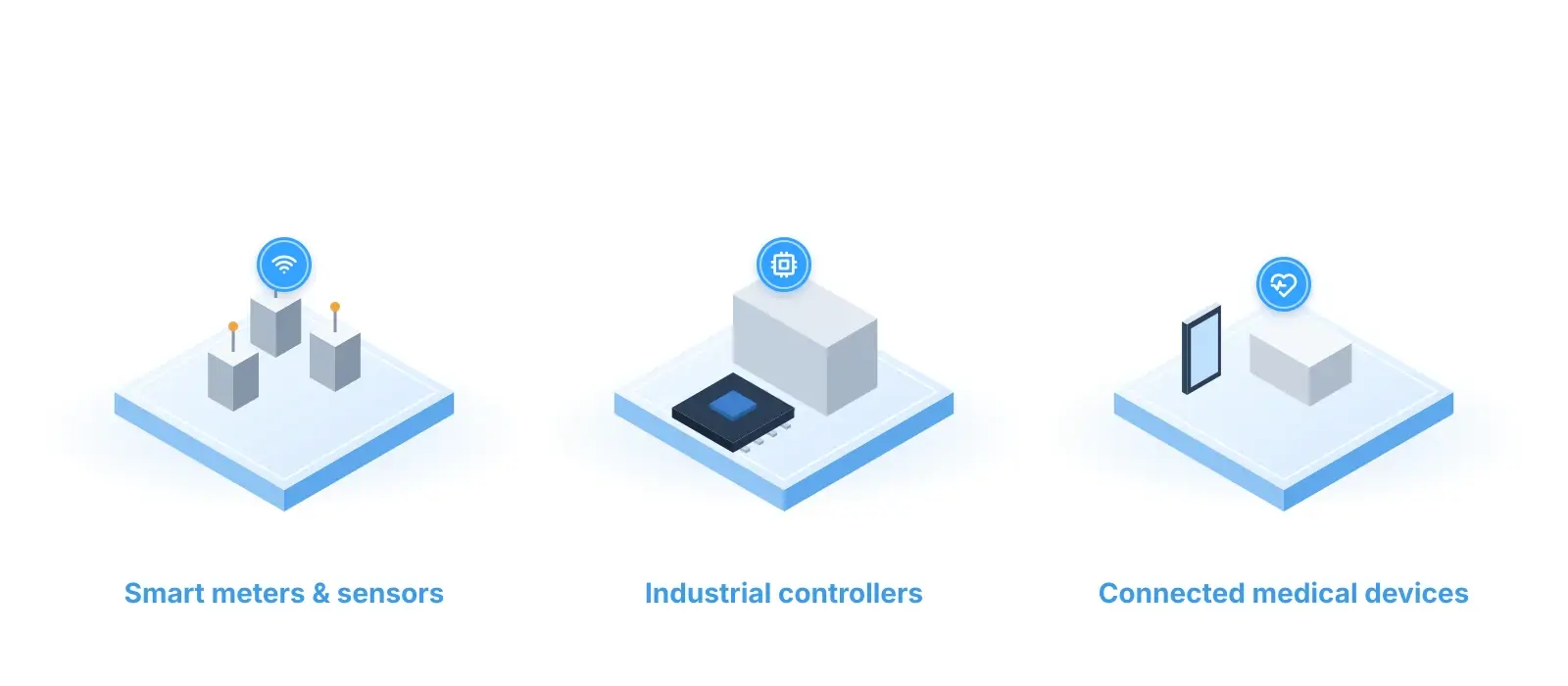
Smart Meters and Sensors
Battery- or mains-powered field devices send readings for years; the SDK protects each connection to the head-end or cloud.
Industrial Controllers
Controllers and gateways in plants and remote sites get quantum-safe links built into new firmware releases.
Connected Medical Devices
Devices that send patient data to clinical systems keep that data protected in transit for its whole sensitive life.
Business Impact
Practical outcomes of adding post-quantum protection at the device level.
Avoid Costly Retrofits
Protection is built in before shipping, instead of recalling or reflashing fleets later.

Keep Hardware Costs Down
Hybrid PQC runs on commodity microcontrollers that teams already use.

Meet Customer Security Questions
Product teams can show a clear post-quantum path when buyers ask.

Consistent Security Across Fleets
The same handshake and key exchange are used across device models.
Key Capabilities
What the SDK enables for device and firmware teams.
Hybrid Key Exchange in Firmware
Combines classical P-256 with ML-KEM-768, so security holds even if one of the two is broken.
Small Footprint
Standard TLS 1.3
Integrates with Existing Firmware
Deployment & Integration
The SDK fits into the device team’s existing firmware process.
Added to the Firmware Build: Included as a library in the existing build and release pipeline.
Works with Existing Back Ends: Connects to cloud or on-premise services that support hybrid TLS 1.3, or through the KPS Quantum-Safe Gateway.
Fits Existing Device Hardware: Runs on the microcontrollers already used in the product.
Delivered with Partners: KPS and its partners adapt the SDK to each device platform, starting with a proof of concept.
Designed to fit your setup
Reference scenarios
A manufacturer preparing a new meter model wants it to stay secure for its full service life. The SDK is added to the firmware so each meter uses hybrid post-quantum TLS to reach the head-end system, with no change to the meter hardware.
Key Outcomes
Quantum-safe connections from first install
Same low-cost microcontroller
No later retrofit needed

Contact Us
For any questions, support requests or partnership opportunities, please reach out to us via:


